Spinal Cord Tumor – Types, Symptoms, Diagnosis and Treatment
Spinal Cord Tumor – Types, Symptoms, Diagnosis and Treatment
- onco
- July 9, 2025
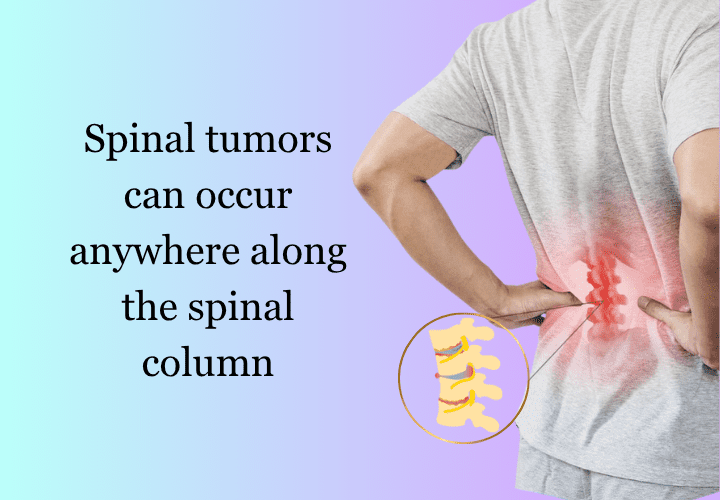
Spinal tumours can happen anywhere along the spinal column, including the vertebrae (bones), the spinal cord, and the surrounding tissues. A spinal cord tumour refers specifically to an abnormal growth of cells within or around the spinal cord itself. The spine, or backbone, extends from the base of the brain (brainstem) down to the tailbone (coccyx), which is part of the pelvis. Early detection, accurate diagnosis, and timely Spinal tumour treatment improve survival and quality of life. However, they are most commonly found in the upper back and less frequently in the neck or lower back.
Types of Spinal Cord Tumours
There are various types of spinal cord tumours that differ based on where they happen, but mainly they are categorised into these –
- Intramedullary spinal cord Tumours –The tumour that grows within the spinal cord itself or in the cells of the spinal cord. Glioma, astrocytoma, and ependymoma are examples of this type.
- Extramedullary spinal cord Tumours – The tumour occurs in the tissues that surrounds the spinal cord, called the dura. These can also affect the nerve roots that reach out from the spinal cord. Meningioma, neurofibroma, schwannoma, and nerve sheath tumour are some examples.
- Benign or Malignant Cancer Tumours – Spinal cord tumours generally aren’t cancerous, which are known as benign spinal cord tumours. Spinal hemangioma, Eosinophilic granuloma, and Giant cell tumour are some of its examples. The spinal tumours that are cancerous are known as malignant spinal cord tumours. Chordoma, Osteosarcoma, Glioma, etc, are malignant tumours.
- Metastatic Tumours – Most spinal tumours are metastatic. Lung Cancer, Leukaemia (blood cancer), Sarcoma (connective tissue cancer), Kidney cancer, and Thyroid cancer are some common cancers that begin elsewhere in your body and can spread (metastasise) to the spine.
Note – Both intramedullary and extramedullary spinal tumours can be either benign or malignant.
Symptoms
Initially, spinal cord tumours may not show signs. However, when Spinal cord tumour symptoms do appear, they are usually felt in the area of the spine near the tumour. As a spinal cord tumour grows, it can hurt nearby nerves and reflect symptoms in other parts of the body. Patients may experience the following:
- Pain near the tumour forms.
- Sharp or shooting pain that may radiate to the arms, legs, hips, or chest
- Pain gets worse at night or with activity
Other symptoms may include –
- Muscle weakness
- Numbness
- Tingling
- Impaired ability to regulate bowel or bladder function.
- Problem with walking.
- Loss of movement or feeling
Causes
Spinal tumour causes depend on the type of tumour: Primary or Secondary
- Primary Spinal Tumour
The cause of the tumour is still unknown. The tumour may be caused by cancer-causing substances or chemicals. Cancers are commonly seen in people with weakened immune systems. It may be genetic as well.
- Secondary Spinal Tumour
Secondary spinal tumours are caused by cancer that formed elsewhere in your body and spread (metastasised) to your spine.
Metastases tumour can occur when cancer cells break away from the tumour—typically located in the abdominal cavity—and spread to nearby or distant organs, such as the liver, lungs, or bones.
Diagnosis
Diagnosing a spinal cord tumour can be an intricate procedure. Based on the Spinal cord tumour symptoms, your doctor may suggest a neurological examination to test your movements and senses. If they identify some potential signs of a spinal tumour, they’ll likely use these tests for diagnosis, including:
- Imaging Tests – Spine X-rays are recommended for patients who experience sudden back pain. A health care provider may also consider an MRI or a CT scan to check the spinal cord, nerves or the surrounding spine. Imaging tests to detect other parts of the body to find out where the tumour begins in a metastatic spinal tumour case.
- Biopsy – A sample of tissue is taken from the tumour to confirm if the tumour is benign or malignant. The taken sample helps to determine if the tumour is growing, and if so, how fast.
- Blood tests – Your doctor may advise certain blood tests to check for abnormal levels of substances in your blood. The body releases these substances into your bloodstream when bone tissue breaks down, which could happen from cancer.
Treatment & Management
Your doctor plans the Spinal tumour treatment after several considerations involving –
- type of tumour
- position on the spinal cord
- age and health of an individual
Surgery – Surgery is the main treatment for Spinal tumours aimed at removing the spinal cord tumour. However, surgery isn’t enough to completely remove the tumour during the operation. Mainly when the tumour is located in the internal part of the spinal cord. A patient might be suggested further treatment such as radiotherapy or chemotherapy, if the tumour remains. Surgery comes with its own risks as it may hurt the spinal cord and the nerves surrounding it.
Radiation Therapy – It uses high-energy beams like X-rays to destroy or damage cancer cells. If the tumour is still left behind after surgery, the tumour returns after treatment, or is of a high grade. Also, Radiation therapy helps slow a tumour’s growth if surgery isn’t possible. The patient usually undergoes a type of radiation therapy called external beam radiation therapy.
Read More Blog: What are the common myths about radiation therapy
Chemotherapy – Chemotherapy treats cancer with anti-cancer drugs. Chemotherapy medicines or drugs are given through a vein, while some come in a pill form. It isn’t efficient for all Spinal tumour treatments. However, it works better in spinal cord tumours that are fast-dividing cells, such as some spinal cord cancers. After surgery, chemotherapy is used to kill any remaining tumours.
Conclusion
Knowing that you have a tumour in your spine is frightening. But no worries! With timely medical attention and appropriate intervention, many patients with spinal tumours can lead active, fulfilling lives. Regular follow-up with the doctor after cancer treatment can help identify spinal tumour metastases early. Approach the doctor immediately if you encounter any of the given symptoms, so they can develop an individualised and thorough treatment plan to help relieve pain and improve your quality of life.
Recent Posts
-

Pancreatic Cancer Treatment: Symptoms, Stages, Treatment Options & Prognosis
September 25, 2026
-
How to Boost Immune System Recovery After Chemo Naturally
September 21, 2026