India witnesses’ approximately 1,200.000 new cancer cases each year, according to the latest projections that people will develop some form of cancer during their lifetime.
What is cancer?
According to the NCI: cancer is a disease in which some of the body’s cells grow uncontrollably and spread to other parts of the body. Cancer can start almost anywhere in the human body, which is made up of trillions of cells. Normally, human cells grow and multiply to form new cells as the body needs them. When cells grow old or become damaged, they die, and new cells take their place.
Sometimes this orderly process breaks down, and abnormal or damaged cells grow and multiply when they shouldn’t. These cells may form tumors, which are lumps of tissue. Tumors can be cancerous or not cancerous (benign).
Cancerous tumors spread into, or invade, nearby tissues and can travel to distant places in the body to form new tumors (a process called metastasis).
Cancerous tumors may also be called malignant tumors. Many cancers form solid tumors, but cancers of the body, such as leukemia, generally do not.
Benign tumors do not spread into or invade nearby tissues; when removed, benign tumors usually don’t grow back, whereas cancerous tumors sometimes do. Benign tumors can sometimes be quite large, however, and some can cause serious symptoms or be life-threatening, such as benign tumors in the brain.
Differences between cancer cells and normal cells: Grow in the absence of signals telling them to grow. Normal cells only grow when they receive such signals.
* Ignore signals that normally tell cells to stop dividing or to die.
* Hide from the immune system. The immune system normally eliminates damaged or abnormal cells.
Many times, cancer cells rely so heavily on these abnormal behaviors that they can’t survive without them.
For example, some cancer therapies prevent blood vessels from growing toward tumors, essentially starving the tumor of needed nutrients.
How does cancer develop?
Cancer is a genetic disease that is caused by changes to genes that control the way our cells function, especially how they grow and divide.
* Genetic changes that cause cancer can happen because of errors that occur as cells divide.
* They were inherited from our parents.
* DNA damage is caused by harmful substances in the environment, such as the chemicals in tobacco smoke and ultraviolet rays from the sun.
The body normally eliminates cells with damaged DNA before they turn cancerous; each person with cancer treatment has a unique combination of genetic changes. As the cancer continues to grow, additional changes will occur. Even within the same tumor, different cells may have different genetic changes.
Types of Genes That Cause Cancer:
The genetic changes that contribute to cancer tend to affect three main types of genes: proto-oncogenes.
Tumor suppressor genes and DNA repair genes—these changes are sometimes called drivers of cancer.
Proto-oncogenes are involved in normal cell growth and division. However, when these genes are altered in certain ways or are more active than normal, they may become cancer genes, allowing cells to grow and survive when they should not.
Tumor suppressor genes are also involved in controlling cell growth and division; cells with certain alterations in tumor suppressor genes may divide in an uncontrolled manner.
DNA repair genes are involved in fixing damaged DNA. Cells with mutations in these genes tend to develop additional mutations in other genes and changes in their chromosomes.
Such as duplications and detection of chromosome parts, together these mutations may cause the cells to become cancerous.
When cancer spreads:
Cancer that has spread from the place where it first formed to another place in the body is called metastatic cancer. The process by which cancer cells spread to other parts of the body is called metastasis.
Tissue changes that are not cancer:
Not every change in the body’s tissues is cancer. Some tissue changes may develop into cancer if they are not treated, however. Here are some examples of tissue changes that are not cancer but, in some cases, are monitored because they could become cancer:
1: HYPERPLASIA: This occurs when cells within a tissue multiply faster than normal and extra cells build up.
2: DYSPLASIA: This is a more advanced condition than hyperplasia.
3: CARCINOMA IN SITU: In an even greater way, although it is sometimes called stage 0 cancer because the abnormal cells do not advance the condition,.
They invade nearby tissue the way that cancer cells do, but because some carcinomas in situ may become cancer, they are usually treated.
Read More: Ductal Carcinoma In Situ (DCIS) Of Your Breast
Types of cancer:
There are more than 100 types of cancer. Types of cancer are usually named for the organs or tissues where they form, for example.
Lung cancer starts in the lungs and brain; cancer may also be described by the type of cells that formed them, such as epithelial cells or squamous cells.
1: CARCINOMA: Carcinomas are the most common type of cancer. They are formed by epithelial cells, which are the cells that cover the inside and outside surfaces of the body.
2: SARCOMA: Sarcomas are cancers that form in bone and soft tissues, including muscle, fat, blood vessels, lymph vessels, and fibrous tissue such as tendons and ligaments.
3: LEUKEMIA: Cancer that begins in the blood-forming tissue of the bone marrow is called leukemia. There are four common types of leukemia, which are grouped based on how quickly the disease is worse (acute or chronic) and on the type of blood cell the cancer starts in (lymphoblastic or myeloid). Acute forms of leukemia grow quickly, and chronic forms grow more slowly.
4: LYMPHOMA: Lymphoma is a cancer that begins in lymphocytes (T cells or B cells). These are the fighting white blood cells that are part of the immune system. In lymphoma, abnormal lymphocytes build up in lymph nodes and lymph vessels, as well as in other organs of the body.
Read More Blog: Blood Cancer – Keep Calm and Fight On
The main two types of lymphoma are:
HODGKIN LYMPHOMA: People with this disease have abnormal lymphocytes that are called Reed-Sternberg cells; these cells usually form from B cells.
Non-Hodgkin Lymphoma: This is a large group of cancers that starts in lymphocytes. The cancer can grow quickly or slowly and can form from B cells or T cells.
Multiple Myeloma: Multiple myeloma is cancer that begins in plasma cells, another type of immune cell. abnormal plasma cells, another type of immune cell; the abnormal plasma cells are called myeloma cells; multiple myeloma is also called plasma cell myeloma; and Kahler disease.
Melanoma is a cancer that begins in cells that become melanocytes, which are specialized cells that make melanin (the pigment that gives skin its color). Most melanomas form on the skin, but melanomas can also form in other pigmented tissues, such as the eye.
Brain and spinal cord tumors
There are different types of brain and spinal cord tumors. These tumors are named based on the type of cell in which they formed and where the tumor first formed in the central nervous system. For example, an astrocytic tumor begins in star-shaped brain cells called astrocytes, which help keep nerve cells healthy. Brain tumors can be benign (not cancer) or malignant (cancer).
Read More Blog: Brain Stroke: Warning Signs, Symptoms, and Prevention
Other types of tumors
Germ cell tumors
Germ cell tumors are a type of tumor that begins in the cells that give rise to sperm or eggs. These tumors can occur almost anywhere in the body and can be either benign or malignant.
Neuroendocrine Tumors
Neuroendocrine tumors form from cells that release hormones into the blood in response to a signal from the nervous system. These tumors, which may produce higher-than-normal amounts of hormones, can cause many different symptoms. Neuroendocrine tumors may be benign or malignant.
Carcinoid Tumors
Carcinoid tumors are a type of neuroendocrine tumor. They are slow-growing tumors that are usually found in the gastrointestinal system (most often in the rectum and small intestine). Carcinoid tumors may spread to the liver or other sites in the body, and they may secrete substances such as serotonin or prostaglandins, causing carcinoid syndrome.
Symptoms and Causes of Anemia Caused by Iron Deficiency:
Anemia is caused when your blood does not have an adequate amount of healthy red blood cells, which provide oxygen to the body’s tissues. In this situation, it is natural that your body has weakness, is short of breath, and feels tired all the time. This is the common type of anemia that occurs due to the iron deficiency that your body requires to make hemoglobin. Iron supplements are available on the market to cure anemia. But if the patient has internal bleeding, then doctors recommend that they undergo further testing or treatment.
There are many people who do not know that they are suffering from iron-deficiency anemia. Generally, women suffer more from iron deficiency, as there is a loss of iron in the blood due to heavy menstruation or during pregnancy. Not only this, but a poor diet or intestinal diseases also lead to iron-deficiency anemia. In this blog, you will read about the symptoms and causes of anemia caused by iron deficiency.
Symptoms of iron deficiency anemia:
The symptoms of iron-deficiency anemia are general fatigue, pale skin, weakness, shortness of breath, dizziness, cravings to eat items that have no nutritional value, swelling in the tongue, headache, brittle nails, cold hands and feet, dizziness, and an irregular heartbeat.
The Main Causes of Iron Deficiency Anemia
The main causes of iron-deficiency anemia are as follows:
- Blood loss due to menstruation:
If girls have heavy menstrual bleeding, then due to the excess of blood loss, they suffer from iron-deficiency anemia. And in the case of pregnancy, women’s bodies require more iron in order to create sufficient oxygen for the baby. During pregnancy, mother and child both require blood for proper oxygen.
- Inadequate Iron Intake:
A deficiency of iron occurs in your body when you eat a small amount of iron over a long period of time. It is recommended to consume nutritious foods that are high in iron, like meat, eggs, and green leafy vegetables. Pregnant women and young children require more iron-rich foods in their diets because iron is essential for the growth and development of the body.
- Genetic Issue:
There are some diseases, such as celiac disease, that run in families and make it difficult to absorb sufficient iron. The issue occurs due to genetic disorders or mutations. This type of genetic disorder prevents your intestines from absorbing iron. Other genetic disorders can also result in anemia.
- Internal bleeding:
Internal bleeding can also occur from medical disorders, which can result in iron-deficiency anemia. Examples of internal bleeding are colon cancer, stomach ulcers, and polyps in the colon or intestines. All types of cancer treatment are available in Delhi. Not only this, but regular use of painkillers like aspirin can lead to stomach bleeding.
- inability to absorb iron
The ability to absorb iron in your body can also be affected by intestinal conditions or surgeries. Even if you consume an adequate amount of iron in your diet, diseases like celiac disease or gastric bypass surgery will reduce the amount of iron in your body.
How to Diagnose Iron-Deficiency Anemia
Iron-deficiency Anemia can be diagnosed with a complete medical history and physical examination. Doctors recommend an iron deficiency check-up when there are problems in your body like complaints of tiredness, abnormal paleness, a fast heartbeat, etc. The medical examination of iron deficiency is through a blood test that measures the amount of hemoglobin present in your body, which will measure the amount of iron present in the blood. Other tests for iron deficiency are bone marrow aspiration or biopsy, and upper or lower endoscopy.
Treatment for iron-deficiency anemia can be determined by the doctor according to your age, health, and medical history. Eat an iron-rich diet like meat, chicken, fish, broccoli, whole-wheat bread, etc. to raise the iron level in the blood. It is suggested that, before taking an iron supplement, always consult your doctor for your daily iron requirement.
Leukemias are cancers that begin in cells that normally develop into various types of blood cells. Most leukemias begin in the early stages of white blood cells, but some leukemias begin in other types of blood cells.
Acute lymphocytic leukaemia (ALL) is a type of leukaemia that is also known as acute lymphoblastic leukaemia. The term “acute” refers to the fact that the leukaemia can progress quickly and, if left untreated, will most likely be fatal within a few months. The term “lymphocytic” refers to the fact that it develops from early (immature) forms of lymphocytes, a type of white blood cell.
Everything begins in the bone marrow (the soft inner part of certain bones, where new blood cells are made). Most of the time, leukaemia cells infiltrate the bloodstream quickly.
LEUKEMIA TREATMENT IN INDIA
- Chemotherapy
Chemotherapy (chemo) is the application of drugs to the treatment of cancer. Chemotherapeutic drugs travel through the bloodstream to reach cancer cells throughout the body. Chemotherapy is therefore useful for cancers that have spread throughout the body, such as leukaemia.
- Targeted Therapy
Drugs used in targeted therapy work by attacking specific parts of cancer cells. They are not the same as standard chemotherapy (chemo) drugs. They occasionally work when chemo does not, and they frequently have different side effects. Some of these medications may be beneficial in certain cases of acute lymphocytic leukaemia (ALL).
- Immunotherapy
Immunotherapy is the use of medications to assist a patient’s immune system in more effectively recognising and destroying cancer cells. Certain types of immunotherapies are now being used to treat acute lymphocytic leukaemia (ALL).
- Surgery
In the treatment of ALL, surgery plays a very limited role. Because leukaemia cells spread so widely throughout the bone marrow and blood, surgery cannot cure this type of cancer. Surgery, with the exception of a possible lymph node biopsy, is rarely used in the diagnosis of ALL, as this is typically done with a bone marrow aspiration and biopsy.
- Radiation therapy:
Radiation treatment is similar to getting an x-ray, except that the radiation is much stronger. The procedure is completely painless. Each treatment is only a few minutes long, but the setup time in getting you into position for treatment – is usually longer. The number of treatments you receive is determined by the reason radiation therapy is used.
- Stem Cell Transplant
A stem cell transplant (SCT) allows doctors to use higher doses of chemotherapy (sometimes with radiation) to kill cancer cells. Following the completion of these treatments, the patient receives an infusion of blood-forming stem cells to restore their bone marrow.
- Typical Treatment
Treatment is usually divided into three stages:
- Incorporation (remission induction): The purpose of induction chemotherapy is to put the leukaemia into remission (complete remission).
- Reorganization (intensification): The next phase usually consists of another relatively short course of chemo with many of the same drugs used for induction therapy.
- Maintenance: Following consolidation, the patient is usually started on a methotrexate and 6-mercaptopurine maintenance chemotherapy regimen (6-MP).
Diarrhoea antibiotic shows potential in treating aggressive blood cancer
A form of aggressive blood cancer might be found to be more sensitive to chemotherapy with the use of an antibiotic currently available for treating diarrhoea, as per novel research published in Science Translational Medicine. The study was funded by Cancer Research UK and Blood Cancer UK, the study looked to tackle a certain type of acute myeloid leukaemia of which contains a genetic modification called MLL, thorough investigations on cancer’s origins.
This form of leukaemia, often called MLL-AML, has a peculiarly poor prognosis as it suddenly turns resistant to standard chemotherapies. Resolving this resistance had proven to be a major challenge in treating this cancer, and has left patients with no other alternative.
Even the best cancer doctors in Delhi concur on the fact that resistance to treatments is the biggest challenge cancer research faces and coming to terms with the fact that there is no other treatment available is undeniably the worst thing a doctor wants to tell their patient. These recent findings demonstrate how unravelling the biology of cancer has lead to new discoveries, and how we could already have a huge array of drugs out there that could help boost the effects of current treatments.
What is MLL-AML?
Acute myeloid leukaemia is a variegated disease, with different sub-types dependent on the genetic mutations that are causing it. This affects how successfully the cancer is treated, with some sub-types having a far poorer prognosis than others. MLL-AML is deadly, with only 1 in 4 patients surviving for 2 to 5 years or so.
The researchers observed how MLL-AML developed in humans for the first time, through establishing a new way of modelling how the stem cells that make our blood could turn into AML when altered by the MLL genetic alteration.
It’s a significant moment for cancer treatment across the world.
After the research that threw light on the origins of MLL leukaemia in mice almost 18 years ago, this development is an important milestone for AML research and provides a new way for screening and identifying new targets to treat.
Using this new approach, the team found that the disease could actually originate from 2 different types of cells, with one causing more resistant disease than the other.
Studying the more resistant type in detail revealed it produced way more of a particular protein – ABCC3 – than the other one, and this could be responsible for making it more resistant to chemotherapy.
When this theory was confirmed in human cells: the team got rid of the cell’s ability to produce any more ABCC3, and it was far more sensitive to chemotherapy.
The next step forward was finding a drug that could stop ABCC3 from being produced or prevent it from working at all. By researching, the team found a paper that showed fidaxomicin – an antibiotic prescribed to treat diarrhoea caused by the bacteria C. difficile – was rather effective for inhibiting ABCC3.
This was unexpected and, actually fortuitous, that there was a recent study showing an already approved antibiotic could work for this research. Testing the drug for the treatment of resistant MLL-AML, the team found it successfully sensitised cancer to chemotherapy in both the cells grown in the lab and in mice.
This is hugely promising and now we need to do further studies and testing with this approach in people with AML and see how many benefits it brings.
Blood cancer occurs when there is an overproduction of abnormal functioning cells in the body. The mass production of abnormal cells suppresses the bone marrow in the production of healthy cells such as platelets, red blood cells, and white blood cells.
Types
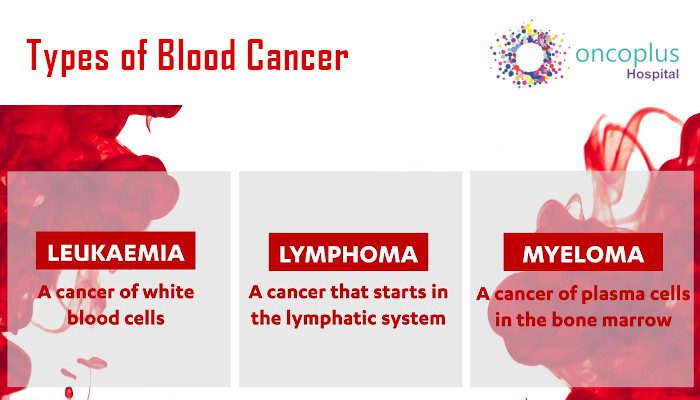
- Leukemia: one of the blood cancer types, wherein there is an overproduction of white blood cells (WBC) that are not functioning properly, thus cannot fight infections.
- Acute Lymphoblastic Leukemia (ALL): rapidly produces immature and abnormal lymphocytes (lymphoblasts), which cannot fight off infection. It produces massively that they crowd out healthy white blood cells, making a person a higher risk for infections.
- Acute Myeloid Leukemia (AML): a type of leukemia wherein there is an uncontrolled production of immature myeloid cells- myeloblasts. Myeloblasts do not mature into healthy functioning WBC, decreasing the body’s defenses against infections. As leukemia cells fill the bone marrow, the red blood cell and platelet production are hindered.
- Chronic Lymphocytic Leukemia (CLL): the same with ALL that it starts to develop in lymphocytes but grows slowly, and blood cancer symptoms manifest after few years; the most common type of cancer in the blood in adults.
- Chronic Myeloid Leukemia (CML): the same with AML, which begins to develops from myeloid cells but develops slowly; more common in men
- Lymphoma: is another blood cancer type that starts with lymphocytes, and abnormal lymphocytes turn to lymphoma cells that reproduce and accumulate in the lymph nodes, spleen, thymus, bone marrow, and other parts of the body. Then it impairs the body’s immunes system.
- Hodgkin’s Lymphoma: starts in immune cells- B cells
- Non-Hodgkin’s Lymphoma: starts in B cells or T cells; the most common type of lymphoma
- Myeloma or Multiple Myeloma: one of the blood cancer types that develop from plasma cells, which are a type of WBC that produces antibodies. This spreads to the bone marrow, damages the bones, and healthy cells are outnumbered.
Stages
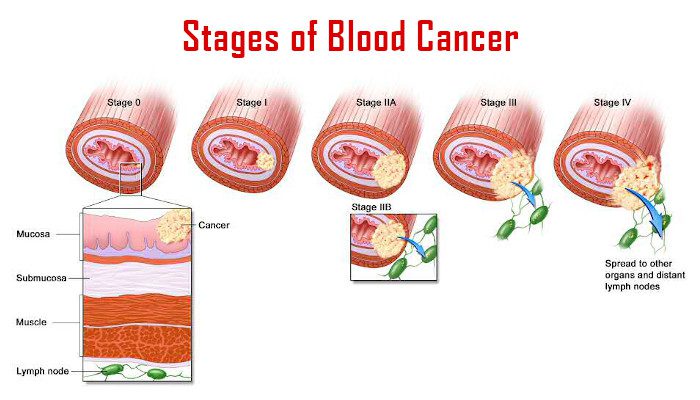
How many stages of it? There are four stages of blood cancer, which are the following:
- Stage I: enlargement of lymph nodes
- Stage II: enlargement in one of these organs: spleen, liver, and lymph nodes.
- Stage III: anemia develops with the enlargement of 2 or more of these organs: spleen, liver, and lymph nodes.
- Stage IV: platelet levels drop swiftly, cancer cells affect the lungs along with the organs affected from the previous stages, presence of acute anemia
Symptoms
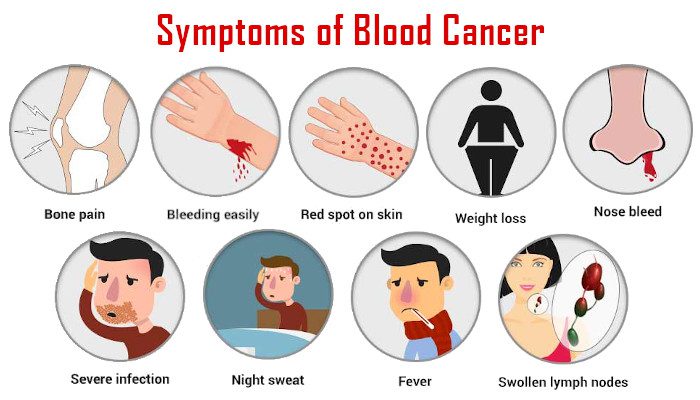
- Skin rash
- Petechiae: tiny, circular, flat patches as a result of bleeding beneath the skin
- Painless swollen of lymph nodes in the neck, underarms, or groin
- Headaches
- Shortness of breath
- Coughing or chest pain
- Recurrent infections: low WBC count
- Night sweats
- Joint pain
- Abdominal pain
- Unexplained weight loss
- Fever and chills
- Persistent body weakness
- Loss of appetite or nausea
- Easily bruising: low platelet count
Causes
Why blood cancer occurs? There is no definite reason yet what are blood cancer causes, but scientists believed that it is formed due to genetic and environmental factors.
Here are some risk factors that make a person is a higher risk of developing cancer in the blood:
- Family history of cancer in the blood
- Previous chemotherapy and radiation treatment are at high risks of developing cancer in the blood
- Genetic disorders such as Down syndrome, Fanconi anemia, and Bloom syndrome
- Exposure to chemicals such as benzene that is used in chemical facilities, rubber industries, shoe manufacturing, and gasoline industries
- Radiation exposure
- Smoking
Book an appointment with Oncology experts at Oncoplus Cancer care.
Diagnosis
Several tests are performed for it diagnosis, which are:
- Physical Exam: the physician assesses for blood cancer signs such as pale skin, swollen lymph nodes, enlargement of the liver and spleen.
- Blood tests
- Complete blood count (CBC): checks the levels of red blood cells, white blood cells, and platelets
- Virology testing: to determine if a person has been infected with HIV, Hepatitis B, and C so appropriate treatment will be given alongside cancer treatment
- Liver function tests: to monitor the status of the liver when undergoing chemotherapy
- Peripheral blood Smear: to check the size and shape of the red blood cells, white blood cells, and platelets
- Urea and electrolytes: to check the functioning of the kidneys, if it has been invaded by cancer or any damaged by blood cancer treatment
- Bone Marrow Biopsy: small bone marrow is taken out to check for any abnormal cells
- Aspirate: liquid bone marrow is taken for biopsy
- Trephine: spongy bone marrow and some bone is taken out for biopsy
- Lymph Node Biopsy: a minor surgical procedure is performed to take a sample of the lymph node with cancer to determine the type of cancer
Book an appointment with the best kidney cancer doctors in Delhi for Kidney Cancer Treatment
Treatment
Can it be treated? There are various blood cancer treatments that are used depending on the type of cancer in the blood and its severity.
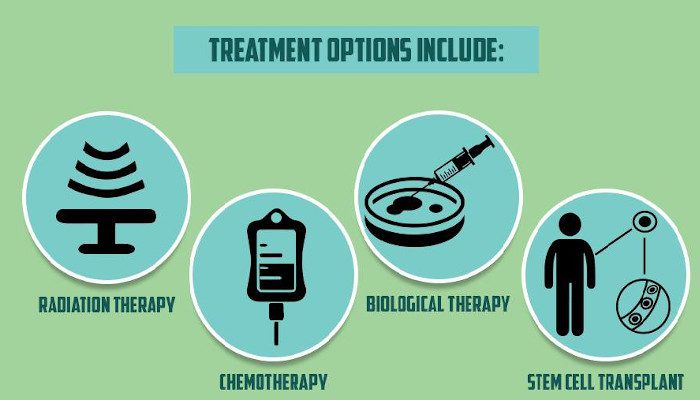
- Stem Cell Transplantation: a method wherein cancer cells in the bone marrow are replaced with healthy cells
- Chemotherapy: a treatment for blood cancer that uses cytotoxic drugs to stop cancer cell production
- Radiation Therapy: another treatment for cancer in the blood that uses high-energy beams
- Biological Therapy: a blood cancer treatment that boosts the immune system of an individual to attack cancer cells
- Targeted therapy: a treatment that attacks the specific weakness of cancer cells
Book an appointment with the Best Cancer Specialist at Oncoplus Hospital.
Symptoms, Diagnosis, and Treatments of Blood Cancer
Blood cancer is very dangerous for our health, we need to find out its symptoms on time and start the treatments as soon as possible if we find symptoms in our health routine we should contact the doctor and inform that what happens. after consulting the doctor and get positive we should not delay we should start treatments of blood cancer.
WHAT IS BLOOD CANCER?
Blood cancer is the type of cancer that originates from the bone marrow as bone marrow is the integral source of blood production. blood cancer affects the production and function of a patient’s blood cell.
There are two type BLOOD CANCER:
- LEUKAEMIA :
Leukemia is the cancer of the white blood cells caused by the rapid production of abnormal white blood cells because of which they cannot fight infections rightly. Leukemia can occur in both adults as well as children. - MYELOMA :
Myeloma is the cancer of plasma cells, which are a type of white blood cell also known as our body’s defense mechanism. In this type of cancer, the body’s ability to fight infections is inhibited leading to frequent illness. Myeloma can develop in any location where there is blood plasma.
SIGNS AND SYMPTOMS
Since the symptoms of Blood Cancer can be confused by flu or other common illnesses so these may often be ignored or overlooked. The symptoms differ from patient to patient as these depend on certain factors including the type of blood cancer, the stage of cancer, the progression (acute or chronic).
A few common signs of blood cancer may include the following:
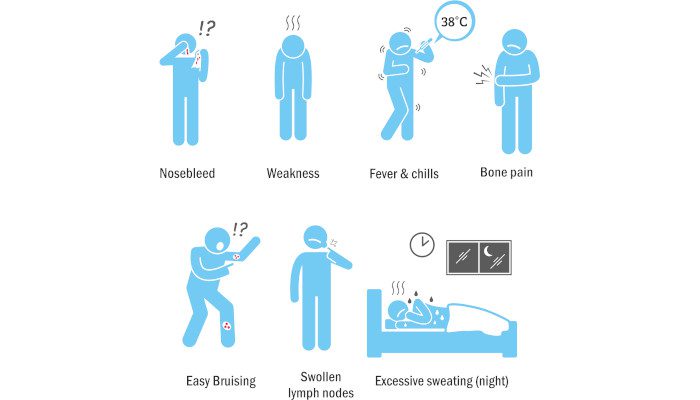
- Anemia
- Fever or infections
- Swelling of Lymph nodes
- Unexplained weight loss
- Pain in the bone
- Swelling of liver or spleen
- Night sweats
RISK FACTOR AND CAUSES OF BLOOD CANCER
There are no exact known causes for developing cancer, but studies prove that some factors may increase the chances a person can have cancer in his/her life. Risk factors can be different for different types of cancer, but there are a few common risk factors for all types of cancer. A few are listed below:
Chemical exposure:
Exposure to chemicals like benzene, formaldehyde, heavy factory smoke and chemicals, etc. can also cause blood cancer.
Radiation exposure:
Exposure to radiation can also cause Blood cancer. The higher the dose of radiation, the more the risk of developing blood cancer.
Smoking:

Smoking is said to be one of the major risk factors for causing blood cancer because tobacco is likely to damage or change the DNA of blood cells that causes abnormal growth causing blood cancer. It can also reduce the body’s immunity, making the body more prone to illness.
Diet for treatment of blood cancer:
Today, more than 50% of the world’s population do not follow a nutritious diet, a few foods, however, increase the risk of cancer. They are as follows:
- Processed meat
- Microwave popcorn
- Aerated drinks
- Diet food and beverages
- Refined flour
- Refined sugars
- Dirty fruits and vegetables
- Farmed salmon
- Hydrogenated oils
Diagnostic Tests for Blood Cancer
The most common tests used to diagnose blood cancer available at Oncoplus Hospital are:
Complete blood count
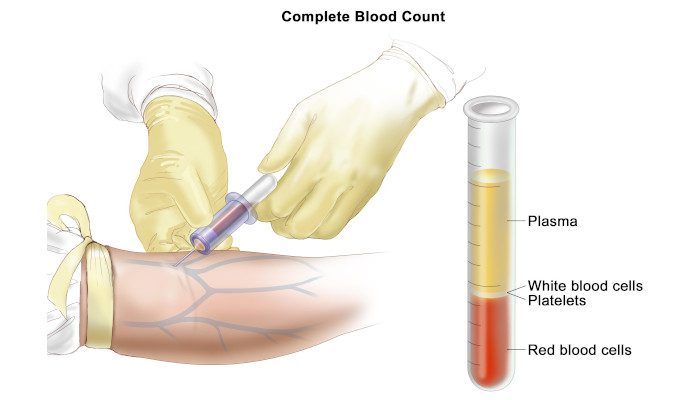
This blood test measures the concentration of various types of blood cells-red blood cells, white blood cells, and platelet cell count, in the given sample. This test determines abnormalities in the blood cells or their concentration in blood. Bone marrow biopsy may help in confirming this diagnosis.
Bone marrow biopsy/aspiration
Removal of bone marrow sample for testing is called bone marrow biopsy or aspiration, the difference being the follows:
- Bone marrow aspiration: to extract a liquid bone marrow sample.
- Bone marrow biopsy: Removing a small amount of bone marrow tissue.
This test determines if the cancer is affecting the bone marrow, the type of blood cancer, and the stage of cancer. The main purpose of this test is to confirm blood cancer as well as bone marrow disorders if any also detect any DNA abnormalities in the sample.
Lymph Node Biopsy
Blood cancer affects the blood cells that successively means the immune system fully gets affected. The lymphatic system is responsible for human immunity. It includes tonsils, spleen, and lymph nodes. The lymph nodes are present in hundreds of the body, which contain white blood cells to fight infections.
In lymph node biopsy, a small cut is made and the node is taken, and the cut is closed by stitches. This test provides information about blood cancer, type, and stage.
Spinal tap
It is also referred to as lumbar puncture. A fine needle is inserted in the space between the bones in the lower back and cerebrospinal fluid is extracted from the spine. This fluid is examined under a microscope to assess the progress of blood cancer, whether it has spread to the spinal cord.
Flow cytometry
This check determines the blood and bone marrow cells to research an amendment within the white blood cell count that might cause cancer.
An instrument known as a flow cytometer is used to measure the number and percentage of cells and their characteristics.
Karyotype test
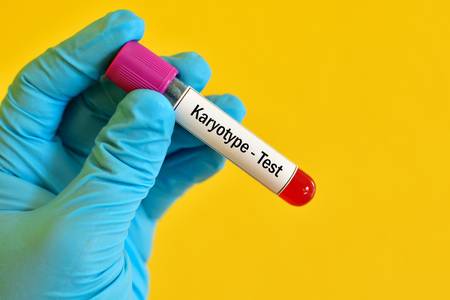
This check maps the forty-six human chromosomes of a cell to see the changes within the chromosomes and their arrangement.
The appearance of This checks for abnormalities within the size, shape, range, and arrangement of the blood cells or bone marrow cells.
Different Blood Cancer Stages and Metastasis
The stage indicates the extent of cancer progression. The stage of cancer helps the specialist to define the correct treatment option for blood cancer. Staging of blood cancer is classified based on blood cell counts and accumulation of these cells within other organs like the spleen, liver, etc. Stages are assessed after a proper evaluation of the patient.
Book an appointment with the Cancer Doctors in Delhi for Blood Cancer Treatment
Treatments of Blood cancer Options
The treatment of blood cancer depends on several factors including the type and stage of cancer, age of the patient, and the organs involved by cancer.
The most crucial treatment options available for blood cancer at Oncoplus are explained below:
1. Chemotherapy Treatment
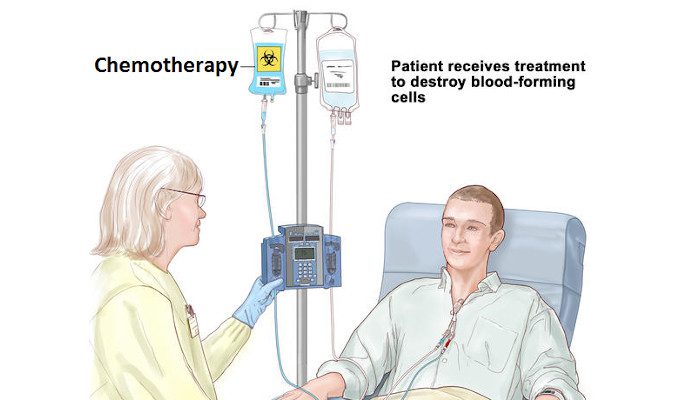
Chemotherapy destroys the rapidly growing cells in the body using chemical drug therapy. It is one of the most reliable and effective treatments to cure blood cancer.
Book an appointment with an Oncologist at Oncoplus.
Chemotherapy Procedure: How it is done?
In Chemotherapy, chemical/drugs/medicines are injected into veins or the larger muscle, which then travel along the bloodstream to reach the cancer cells. These drugs stop the cancerous cells from spreading further in the body. Chemotherapy is conducted in stages allowing the patient to handle the side effects of treatment, however, these are generally short-termed and medication is prescribed after every session of therapy.
Side effects of Chemotherapy in blood cancer treatment:
Few organs including the Heart, Lier, Brain, Testicles, Ovaries, kidneys are affected due to chemotherapy. Other common side effects of chemotherapy include:
- Appetite changes
- Hair loss
- Nausea and vomiting
- Anemia
- Fatigue
- Constipation
The oncologist and team at Oncoplus takes care of the tolerance levels of the Patient before proceeding with the treatment.
2. Radiation Therapy for Blood Cancer Treatment
Radiation therapy damages the DNA in the cancerous cells using high-energy radiation, which further restricts their growth and reproduction.
Side effects of radiotherapy in treatment of blood cancer:
- Hair loss
- Nausea and Vomiting
- Skin problems
- Sore throat
- Heartburn
Since radiations are of high energy so it is advised to have a nutritious diet after radiotherapy also regular exercises contribute to the benefits of the patient’s health after radiotherapy.
3. Stem Cell Transplantation for Blood Cancer treatment
Since other treatment methods destroy the cancerous cells so patient’s body needs more new cells to maintain the normal functioning of the body. Stem cells are the cells of the bone marrow that develop further to produce new blood cells.
4. Blood Targeted Therapy for Blood Cancer treatment
This type of therapy targets the specific molecules that help cancer to grow and spread across the body. The main agenda of this therapy is to target the genes, proteins, and supporting blood vessels. This therapy is done alone or in combination with chemotherapy.
Side effects of Blood targeted therapy are :
- Increasing blood pressure
- Skin problems
- Gastrointestinal perforation
- Problems with blood clotting and wound healing
Book an appointment with the Best Cancer Specialist at Oncoplus Hospital.