Many people struggle with stubborn fat deposits that do not respond to diet or exercise. For individuals looking to enhance their body shape and confidence, liposuction surgery has become a trusted solution. This procedure is now widely available at advanced healthcare centers, including those recognized for offering the best cancer treatment in Delhi. Choosing a reputed cancer specialist hospital in Delhi not only ensures expert surgical care but also provides the highest standards of safety, making liposuction a reliable option for patients who want lasting results.
What is Liposuction Surgery?
Liposuction, also known as “lipo” or “fat removal surgery,” is a minimally invasive cosmetic procedure that removes stubborn fat deposits from targeted areas of the body. These areas often include the abdomen, thighs, arms, hips, buttocks, chin, and back. Unlike weight loss methods, liposuction is not designed for overall obesity management but for body contouring—reshaping specific areas to create a more proportionate appearance.
The procedure is performed by a qualified surgeon, often using advanced techniques such as tumescent liposuction, ultrasound-assisted liposuction (UAL), or laser-assisted liposuction (LAL).
Who is an Ideal Candidate for Liposuction?
Not everyone is suitable for liposuction. An ideal candidate is:
- A person with stable body weight but localized fat deposits.
- Someone with good skin elasticity and muscle tone.
- A non-smoker or someone who can quit smoking before and after surgery.
- Individuals who are generally healthy and have realistic expectations.
People with serious health concerns, uncontrolled diabetes, or weakened immunity may not be suitable candidates. A consultation with a specialist surgeon at a reputed hospital is always recommended.
How Liposuction Surgery is Performed
The process of liposuction involves a few key steps:
- Anesthesia – Depending on the area and extent, local or general anesthesia is administered.
- Incision – Small incisions are made in the targeted area.
- Fat Loosening – A thin tube (cannula) is inserted to break down fat cells using suction or laser technology.
- Fat Removal – The dislodged fat is suctioned out through the cannula.
- Closing the Incision – The incisions are closed with minimal scarring.
The duration of the procedure varies from one to three hours, depending on the size of the treatment area.
Benefits of Liposuction Surgery
Liposuction is not just about cosmetic improvement—it offers multiple benefits that impact confidence and lifestyle.
- Improved Body Shape and Contours
Liposuction helps remove stubborn fat pockets that do not respond to diet and exercise, giving a more proportionate body. - Boosted Confidence
Many patients experience enhanced self-esteem after achieving their desired body shape. - Permanent Fat Removal
Fat cells removed during liposuction do not return, provided the patient maintains a healthy lifestyle. - Treatment of Medical Conditions
Liposuction can also treat certain conditions like lipomas (benign fatty tumors), gynecomastia (excess fat in male breasts), or lymphedema (swelling due to lymph fluid). - Combination with Other Procedures
It can be safely combined with tummy tucks or body lifts for more comprehensive results.
Recovery After Liposuction Surgery
Recovery is an essential phase of liposuction. Patients are usually discharged the same day or within 24 hours. Here’s what recovery looks like:
- Mild swelling, bruising, and discomfort for the first few days.
- Compression garments are recommended to support healing.
- Light activity can be resumed in a few days, but strenuous activity should be avoided for at least 4–6 weeks.
- Final results are visible after swelling subsides, typically within 2–3 months.
Your surgeon will provide detailed post-operative care instructions to ensure smooth healing.
Risks and Safety Considerations
Like any surgery, liposuction carries some risks. Potential complications include infection, bleeding, uneven contours, or skin irregularities. However, when performed by experienced surgeons at a cancer specialist hospital in Delhi or a recognized multi-specialty center, the risks are minimized due to advanced medical infrastructure, sterile techniques, and expert care.
Liposuction vs. Weight Loss: What’s the Difference?
It is important to understand that liposuction is not a weight loss surgery. It focuses on reshaping the body by removing localized fat deposits, not reducing overall body weight. People who want to lose significant weight may need to explore lifestyle changes, bariatric surgery, or medical weight management programs before considering liposuction.
Why Choose a Specialist Hospital in Delhi for Liposuction?
When it comes to cosmetic or reconstructive procedures, the choice of hospital matters. A cancer specialist hospital in Delhi or a multi-specialty center often has the latest surgical equipment, highly qualified surgeons, and state-of-the-art safety protocols. Even if liposuction is a cosmetic procedure, undergoing it at a reputed healthcare facility ensures world-class care and long-term safety.
Hospitals known for offering the best cancer treatment in Delhi are also recognized for their advanced surgical expertise, modern infrastructure, and patient-first approach. Patients can expect accurate pre-surgical assessments, safe anesthesia management, and dedicated post-operative care.
Frequently Asked Questions (FAQs)
- Is liposuction painful?
Liposuction is performed under anesthesia, so patients do not feel pain during surgery. Some soreness and swelling are common during recovery but can be managed with medication. - How much fat can be removed?
Surgeons usually remove between 2–5 liters of fat safely, depending on the patient’s health and targeted area. - Are the results permanent?
Yes, fat cells removed through liposuction do not come back. However, maintaining a healthy diet and exercise routine is essential to prevent new fat accumulation. - How soon can I return to work?
Most patients resume work within a week, though it depends on the size of the treatment area and the nature of their job. - Is liposuction safe for cancer patients?
Cancer survivors or patients must consult their oncologist and surgical team before considering liposuction. Undergoing the procedure at a cancer specialist hospital in Delhi ensures safe evaluation and expert guidance.
Conclusion
Liposuction surgery is a safe, effective, and lasting solution for people who want to reshape their bodies and eliminate stubborn fat deposits. While it is not a substitute for weight loss, it can significantly enhance body confidence and improve lifestyle. Choosing the right hospital is crucial—especially a reputed center known for advanced care and trusted specialists.
Hospitals that provide the best cancer treatment in Delhi are also well-equipped to handle cosmetic and reconstructive surgeries like liposuction with utmost precision and safety. With expert consultation, advanced technology, and dedicated care, liposuction can be a life-changing step toward improved confidence and overall wellness.
Sometimes, if you find that there is a rash on your breast or that your breast is swollen, it is possible that you are suffering from a breast infection. But, in some cases, it is a sign of an inflammatory breast cancer that grows in your body over weeks or months. This is a rare form of cancer, but it is a fast-growing cancer that requires immediate treatment. A breast infection, also known as mastitis, is a condition that occurs when the breast tissue becomes infected. It usually occurs in women who are breastfeeding, but it can also occur in women who are not breastfeeding. The symptoms of IBC are swelling, pain, redness, and enlargement of the breast. In Delhi, the best breast cancer treatment is available at Oncoplus Hospital. In this blog, you will read about whether your rash is caused by a breast infection or inflammatory breast cancer.
Read More: 6 Lifestyle Changes To Improve Life After Breast Cancer Treatment
Symptoms of Inflammatory Breast Cancer:
The symptoms of inflammatory breast cancer are as follows:
- Pain, itchiness, or tenderness in the breast.
- Redness and swelling in the breast
- Warmth or heaviness in the breast.
- Thickening or a lump in the breast.
- Nipple discharge that may contain pus
- Flu-like symptoms, such as fever and chills.
- If the breast nipple goes flat or inward,
- If the patient finds a swollen lymph node under the arm or near the collarbone,
The symptoms of IBC can develop quickly, within days or weeks. If you have persistent symptoms, then it is important to see a doctor for an accurate diagnosis. A doctor may perform a physical exam, imaging tests, and a biopsy to confirm whether the symptoms are due to a breast infection or IBC.
Read More: Common Misconceptions About Breast Cancer
Factors That Cause Inflammatory Breast Cancer:
There are several factors that are known to increase the risk of developing inflammatory breast cancer. They are as follows:
- Age:
The primary risk factor for IBC is age. Women over the age of 50 are more likely to develop breast cancer than younger women.
- Gender:
This type of cancer is more likely to occur in women, but it can affect people of all genders.
- Family History:
Family history is another factor that can increase the risk of developing IBC. The women whose relative has had breast cancer are at a higher risk of developing the disease.
- Other factors:
Other factors that can increase the risk of IBC include obesity, exposure to radiation, alcohol consumption, and hormonal factors. Women who have had previous breast biopsies or have dense breast tissue may also be at a higher risk of developing IBC.
Diagnosis of Inflammatory Breast Cancer:
There are several diagnostic tools and tests that healthcare providers use to diagnose IBC. Some of the common diagnostic tools are as follows:
- Physical examination:
A healthcare provider will perform a thorough physical examination of the breast, in order to look for signs of redness, swelling, or other changes.
- Imaging tests:
Imaging tests such as mammography, ultrasound, or MRI can help identify any suspicious areas in the breast. Generally, IBC and breast infections appear similar on imaging tests.
- Biopsy:
During a biopsy, doctors remove a small sample of breast tissue for examination under a microscope, which is the only way to diagnose IBC. Typically, if IBC is suspected to have spread to nearby lymph nodes, doctors may recommend a biopsy of the lymph nodes to determine the extent of cancer spread.
Treatment for Inflammatory Breast Cancer:
The treatment for IBC usually involves a combination of chemotherapy (which uses drugs to kill cancer cells), surgery (removes the entire affected breast), and radiation therapy (which uses radiation to destroy cancer cells). It is important to start the treatment as soon as possible to prevent the cancer from spreading in the patient’s body.
In conclusion, a rash on the breast can be a sign of a breast infection or inflammatory breast cancer. While the symptoms of a breast infection and IBC can be similar, it is important to visit a doctor for an accurate diagnosis. If you have persistent symptoms, such as a red, swollen breast or persistent itching, it is important to seek medical attention as soon as possible. With early detection and treatment, both breast infections and IBC can be successfully treated at the best cancer specialist hospital in Delhi. Oncoplus Hospital is famous for providing the best cancer treatment to cancer patients.
Tips for Preventing and detecting skin cancer
As the days grow hotter and sunny, outdoor activities such as running, biking, swimming does not stop. These activities are necessary for our lives as working outdoors is good for physical and mental health, and spending time in the sun also assists the body to get the sunshine vitamin D.
Exposure to UV radiation from the sun can be very harmful for the skin, and can damage the DNA in skin cells, making mutations, which can cause skin cancer. Studies state, five or more sunburns can double the risk of melanoma.
Preventing and detecting skin cancer while enjoying the outdoors becomes very important. Protect yourself from harmful UV rays or artificial sources of radiation such as tanning beds. Experts suggest to avoid the sun between 10 am – 4 pm as the UV intensity is highest. Using sunscreen and protective clothing is extremely necessary; avoiding tanning beds at all costs.
There are two types of risks associated with skin cancer. There are risks, which we can control, and there are risks, which we can do nothing about. Exposure to ultraviolet light is a modifiable risk factor for the development of skin cancer. Experts suggest to use sunscreen, apply liberal amounts of sunscreen at least every two hours when you are outside, and more often if participating in water activities. On a hot sunny day, if applied liberally one could use up to an entire bottle of sunscreen.
Other way of blocking the harmful UV rays is by wearing protective clothing, which have an ultra violet protection factor, where one doesn’t have to worry about reapplication of sunscreen if you are wearing the UPF clothing. Do add sunglasses and wide hat
Fields recommends adding a wide-brimmed hat and sunglasses to other UPF clothing for best protection. This helps protect the head, ears and eyes from UV while spending time outdoors.
Do not wait. Even a tiny spot on the skin could be a sign of melanoma or other kinds of skin cancer. Do not neglect the sign, and consult with Skin Cancer specialists at Oncoplus Hospitals, Defence Colony, New Delhi, India. Make prevention a part of your routine as it is never too late to start good habits to protect yourself for UV rays.
Always Wear sunscreen and/or protective clothing, seek shade when possible, to reduce UV exposure, avoid tanning beds and always self-examine your skin for new or changing spots. Give yourself a self-examination, looking for any new or changing spots on your skin. Early detection and treatment is key to successfully remove skin cancer. Some of the deadliest forms of skin cancer, can spread, if left untreated.
skin is the outer covering of our body, and is the largest organ of the body with a surface area around 20 square feet.
The skin is composed of three main layers:
- The epidermis is the outermost layer of the skin. This layer serves as a barrier for infections forming a waterproof protective wrapping around the body surface.
- Underneath the epidermis another layer is “Dermis” that contains connective tissue providing cushions to the body, nerve endings that provide the sense of touch and heat, blood vessels, hair follicles and sweat glands.
- The hypodermis is the innermost layer which is also known as subcutaneous tissue. It is made of fat serving as padding and insulation for the body and connective tissue to attach the skin to bones and muscles.
There are several treatment options available to cure bone cancer at Oncoplus Hospital, Delhi.
WHAT IS SKIN CANCER?
Skin cancers are cancers that start in the skin cells.
it is developed when the abnormal growth of skin cells develops on skin which is exposed to the sun. However, it can also occur on those areas of skin which are not exposed to sunlight.
TYPES :
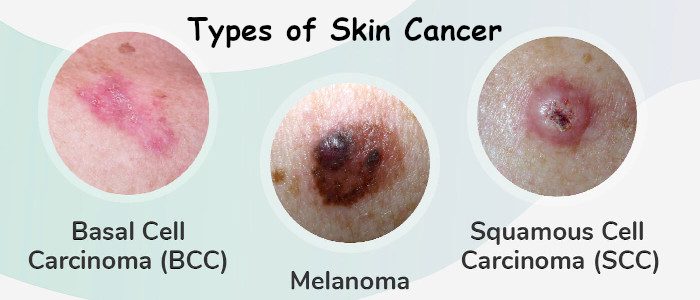
The outermost layer i.e, epidermis is made up of three types of cells- basal cells, squamous cells and melanocytes. Most common type of skin cancer develops in these tissues. These are as follows:
- Basal cell carcinoma: Basal cell carcinoma is rarely staged as these are almost always cured before they spread to other parts of the body.
- Squamous cell carcinoma: Squamous cell carcinoma usually occurs in the head and the neck regions and is more likely to recur and also spread to other parts of the body.
- Melanoma Skin Cancer: Melanoma is the cancer that starts in the melanocytes. These are skin cells that make a deep brown pigment called melanin which is responsible to give the skin its colour. It protects the deep layers of the skin from the effects of the sun and exposure to sun increases the production of melanin making people get tan or get darker.
Book an appointment with the best oncologists for cancer treatment as well as diagnosis at best cancer Hospital in Delhi.
SYMPTOMS :
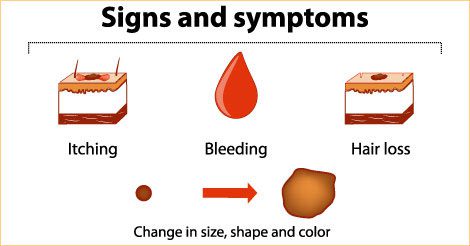
Skin cancer develops primarily on areas of sun-exposed skin, including the scalp, face, lips, ears, neck, chest, arms and hands, and on the legs in women. But it can also develop on palms, beneath fingernails or toenails, and genital area, that hardly see the sunlight.
The symptoms of the skin cancer can depend on the type of skin cancer too. The following are the symptoms of the common types of skin cancer:
- Sores or moles that appear smooth and pearly, look waxy or appear as a firm, red lump
- These may bleed sometimes
- They begin to heal but recurs
- These can be itchy too
- It may develop into a painless ulcer.
- A flat, flesh-coloured or brown scar-like lesion
- Red and scaly patches of the skin that bleed
- Bleeding sores
- A wart-like growth that bleed
- Itching, burning sensation and tenderness in the affected areas
- Changes in size, colour or feel of common (normal) moles
- Bleeding moles
- Brownish spot with dark speckles.
CAUSES
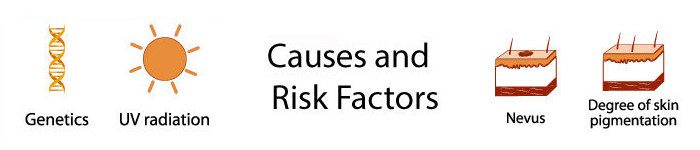
Skin cancer occurs when DNA of skin cells change, termed as mutation. This process cause the cells to grow abnormally forming a mass of cancer cells.
ULTRAVIOLET RAYS
Much of the damage to DNA in skin cells results from ultraviolet (UV) radiation found in sunlight and in the lights used in tanning beds. Ultraviolet (UV) radiation emitted by the sun can damage skin cells and genes, which makes it a major risk factor for skin cancer.
But sun exposure doesn't explain skin cancers that develop on skin not ordinarily exposed to sunlight. This indicates that other factors may contribute to the risk of skin cancer, such as being exposed to toxic substances or having a condition that weakens our immune system.
RISK FACTORS
Factors that may increase the risk of skin cancer include:
- Excessive sun exposure: People who spend more time in the sun might develop skin cancer. Excessive skin tanning is skin's injury response to excessive UV radiation.
- Sunny or high-altitude climates: People who live in sunny, warm climates are exposed to more sunlight are also at risk of developing skin cancer.
- Moles: People who have many moles or abnormal moles which look irregular and are generally larger than normal moles are at increased risk of skin cancer.
- Precancerous skin lesions: Having rough, scaly patches that range in colour from brown to dark pink skin lesions can increase the risk of developing skin cancer.
- A family history of skin cancer: If anyone in family once had skin cancer, one may be at increased risk of the skin cancer.
- A personal history of skin cancer: Patients with history of skin cancer can develop it again.
- A weak immune system: People with weakened immune systems tend to grow quickly and are more likely to cause death.
- Exposure to certain substances: Risk of skin cancer is more when exposed to certain substances, such as arsenic.
- HPV-Human papillomavirus can be related with a considerable amount of skin cancers.
Diagnosis:
- Physical examination: The Dermatologist examines the patient’s skin to determine whether the skin changes are likely to cause skin cancer. Further tests and investigations are required to confirm the diagnosis.
- Imaging Tests:
- Chest X ray
- CT scan
- PET scan
- MRI
- CT-PET scan
- Blood tests: Blood tests are done to check overall health of patient including marrow, liver, and kidney functions.
- Biopsy: “Dermatologist” removes the suspicious-looking skin for lab testing to determine whether you have skin cancer and, if so, what type of skin cancer it is.
STAGES :
Once it has been diagnosed, staging is done to determine the extent of the skin cancer in the body. Staging helps the “Oncologist or Cancer Specialist” to define the plan how to cure the cancer.
- Stage I: The cancer is around 2 cm or lesser in size and has no high-risk features.
- Stage II: The cancer is around 2 cm in size and has a few high-risk features.
- Stage III: The cancer spread into the bones of face like the jaw bone or the bone around the eye or it may grow to a nearby lymph node and size is less than 3 cm.
- Stage IV: The cancer has spread into the spine, lower part of the skull or the ribs or it has spread to a lymph node more than 3 cm in size or to an internal organ such as the lungs.
TREATMENT OPTIONS:
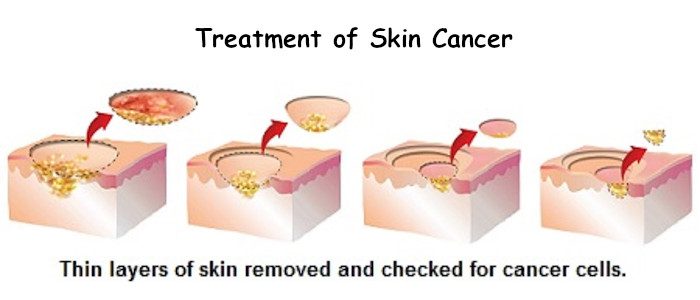
The following are the major treatment options available at Oncoplus Hospital, Delhi for treating skin cancers:
Skin Cancer Surgery
Surgery is the most common and preferred treatment method to cure skin cancer. There are different types of surgeries available to treat skin cancers, the exact type is chosen based on the severity of the condition and the location of the cancer.
- Mohs surgery: This procedure is for larger, recurring or difficult-to-treat skin cancers. This procedure allows cancerous cells to be removed without taking an excessive amount of surrounding healthy skin.
In this surgery, doctor removes the skin growth layer by layer, examining each layer under the microscope, until no abnormal cells remain. - Curettage and electrodessication: After removing most of a growth, the doctor scrapes away layers of cancer cells using a device with a circular blade (curet). An electric needle destroys any remaining cancer cells.
- Cryosurgery: Early it can be destroyed by freezing them with liquid nitrogen.
- Laser surgery:
- Excisional surgery: In this type of surgery doctor cuts out (excises) the cancerous tissue and a surrounding margin of healthy skin. A wide excision — removing extra normal skin around the tumor — may be recommended in some cases.
Targeted therapy
This treatment uses drugs that target the cancerous cells. They avoid causing extreme damage to the remaining healthy cells which can occur in chemotherapy. As a part of targeted therapy in treating recurrent basal cell carcinoma, a signal transduction inhibitor is used. These inhibitors block the signals that pass between molecules in the cells, which leads to death of those cells.
Immunotherapy
Immunotherapy aims in making the patient’s immune system stronger by using artificial substances to restore the body’s defence against cancer. This procedure is also known as biotherapy or biologic therapy.
Photodynamic therapy (PDT)
This treatment destroys skin cancer cells with a combination of laser light and drugs that makes cancer cells sensitive to light.
Chemotherapy for Skin Cancer
Chemotherapy drugs to kill cancer cells throughout the body and is used if the skin cancer has metastasized and spread to other organs. It is not the standard treatment for this cancer type though unless the cancer has advanced. The treatment is given in cycles of medication and rest to allow the body to recover and reduce the intensity of side effects.
Radiation therapy
Radiation therapy uses high-powered energy beams, such as X-rays, to kill cancer cells. Radiation therapy may be an option when cancer can't be completely removed during surgery.