How To Identify Key Gastrointestinal Symptoms And Early Warning Signs Of GI Cancers.
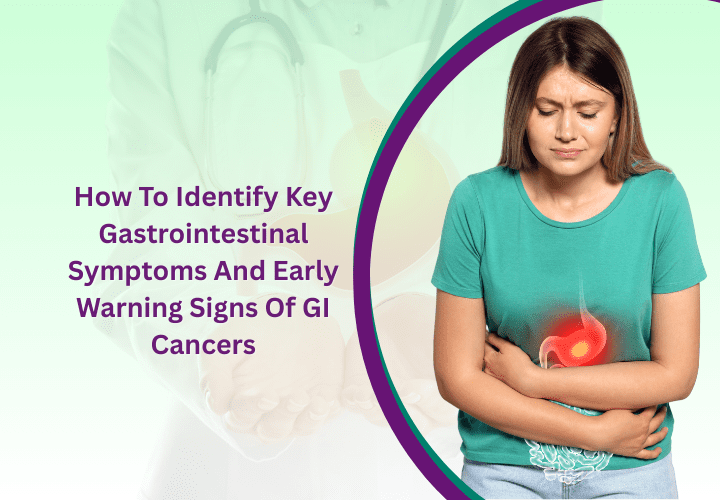
How To Identify Key Gastrointestinal Symptoms And Early Warning Signs Of GI Cancers.
- onco
- September 25, 2025
GI (gastrointestinal) cancer means cancer in the digestive system, like the stomach, food pipe, liver, pancreas, or intestines. The GI cancer symptoms are often simple body changes that can be easily noticed like stomach pain or discomfort, difficulty swallowing, loss of appetite or feeling full quickly, sudden weight loss.
The early sign of gastrointestinal cancer are:
- Persistent Abdominal Pain or Discomfort
One of the earliest signs of gastrointestinal cancer is the ongoing abdominal pain, bloating, or in some cases cramping. This discomfort may persist over weeks or sometimes months and often does not improve with normal remedies. Pain that gradually worsens or remains constant may indicate abnormalities in the digestive organs.
- Difficulty Swallowing and Changes in Appetite
Trouble swallowing, known as dysphagia, or feeling full quickly after eating small amounts can be early indicators of cancers affecting the oesophagus, stomach, or pancreas. Loss of appetite and early satiety are often subtle but persistent signs that warrant timely medical attention.
- Unexplained weight loss
Cancer cells can consume significant energy and interfere with digestion and nutrient absorption, leading to weight loss without any changes in diet or physical activity, especially when accompanied by other digestive symptoms.
- Changes in bowel habits
Constipation), diarrhea or alternating between constipation and diarrhea, or unusually thin or ribbon-like stools. Such changes in bowel habits, especially if they persist for several weeks without a clear cause, indicates a problem in the digestive system and requires immediate medical evaluation.
- Blood in stool.
The presence of blood in stool, whether bright red or dark and tarry, can indicate bleeding somewhere in the digestive tract. Bright red blood usually originates from the lower GI tract, while black stools may indicate bleeding higher up, such as in the stomach. Any unexplained gastrointestinal bleeding should be investigated promptly.
- Nausea, vomiting and indigestion
Frequent nausea, vomiting, or indigestion can be early signs of gastrointestinal cancer pancreatic, or other GI cancers. These symptoms, especially when they do not improve with standard treatment, should not be overlooked.
The digestive system comprises of many organs that help us break down and absorb food. In the early stages, symptoms might be mild or non-existent, making it easy to ignore them. Additionally, many of these symptoms are similar to those experienced in common digestive issues like acidity, constipation or diarrhoea which are all experience occasionally. As a result, we often assume that the symptoms are due to a minor issue rather than a serious one, like cancer. This leads to a delay in diagnosis, and most of the time, gastrointestinal cancers symptoms are diagnosed at an advanced stage. This makes treatment more challenging and reduces the chances of survival.
Gastrointestinal (GI) cancers constitute a significant portion of malignancies affecting the digestive tract. These organs include the food pipe (oesophagus), stomach, small intestine, large intestine (colon and rectum), gallbladder, bile duct, pancreas, and liver. Unfortunately, any of the organs can show the early signs of gastrointestinal cancer, these include:
- Cancer of the food pipe
- Stomach cancer
- Cancer of the large intestine (colon and rectum)
- Gall bladder cancer
- Bile duct cancer
- Pancreatic cancer
- Liver cancer
- Neuroendocrine tumours
- Gastrointestinal cancer
Early signs of gastrointestinal cancer is often present with subtle or non-specific clinical manifestations, leading to delayed diagnosis. Treatment depends on the type, location, and early signs of gastrointestinal cancer. Surgery is often the primary option when the tumour is localized and operable, as it can remove the cancer entirely. In many cases, chemotherapy and radiation therapy are used either before surgery to shrink the tumour or after surgery to eliminate any remaining cancer cells. Targeted therapy and immunotherapy have emerged as effective options for advanced or resistant cancers, as they specifically attack cancer cells while minimizing damage to healthy tissue. In situations where a complete cure is not possible, palliative care is provided to manage pain, digestive problems, and other symptoms, helping patients maintain a better quality of life. A multidisciplinary approach involving surgeons, oncologists, radiologists, and supportive care specialists is essential to provide comprehensive treatment and improve outcomes.
Monitoring these persistent or atypical symptoms and seeking medical consultation at an early stage can facilitate timely diagnosis and improve treatment outcomes.
The common risk factors for these cancers includes the increasing age, family history of gastrointestinal cancer, smoking and alcoholism, processed food diet and lack of physical activity and exercise.
Recent Posts
-

Best Oncology Hospital in Delhi – A Caring Guide for Patients & Families
February 17, 2026
-

Liver Health Prevention – NAFLD, NASH, and Liver Disease
January 27, 2026