Targeted Therapy for Cancer: Advanced Treatment Options, Benefits & Side Effects
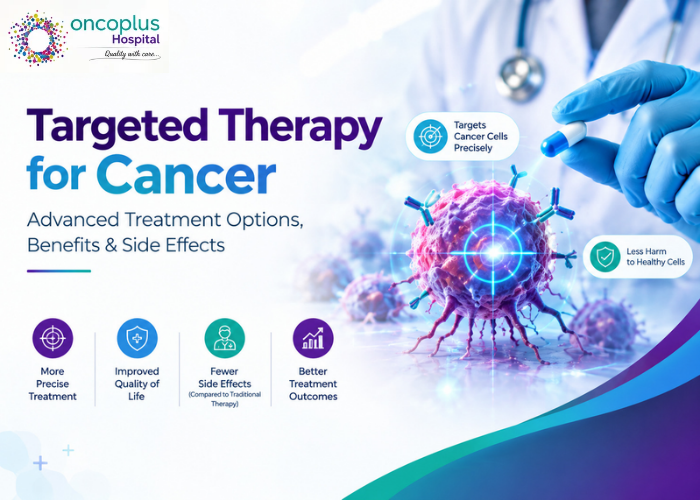
Targeted Therapy for Cancer: Advanced Treatment Options, Benefits & Side Effects
- onco
- October 27, 2026
Cancer treatment is becoming more personalised, with doctors increasingly using information about a tumour’s biological characteristics to guide treatment decisions. Targeted Therapy is one approach that focuses on specific proteins, genes, or other features that help cancer cells grow and survive. Unlike conventional chemotherapy, which often affects many rapidly dividing cells, targeted therapy is designed to act on particular cancer-related targets.
However, it is not suitable for every patient or every cancer. The right treatment depends on the cancer type, its stage, biomarker test results, and the patient’s overall health.
For patients exploring Targeted Therapy Treatment in Delhi, understanding how these medicines work, their potential benefits, and their possible side effects can help make conversations with an oncologist more informed.
What Is Targeted Therapy for Cancer?
Targeted therapy is a form of precision medicine that uses medicines designed to interfere with specific molecular changes involved in cancer growth. These changes may allow cancer cells to multiply uncontrollably, avoid normal cell death, or develop a blood supply that supports tumour growth.
The goal is to disrupt these processes while limiting unnecessary damage to healthy cells. Nevertheless, targeted medicines can affect normal tissues and may cause significant side effects.
How Does Targeted Therapy Work?
Targeted medicines work in different ways, depending on the biological feature they are designed to affect. They may:
- Block growth signals: Prevent cancer cells from receiving signals that encourage them to multiply.
- Interfere with tumour blood vessels: Block signals that help tumours develop the blood supply they need to grow.
- Trigger cancer cell death: Disrupt processes that allow abnormal cells to survive.
- Deliver treatment to specific cells: Some antibody-based medicines carry cancer-killing substances to cells with a particular target.
These mechanisms help explain why the same medicine may benefit one patient but not another, even when both have cancer in the same organ.
Types of Targeted Therapy Treatment
Targeted therapy medicines generally fall into two broad categories.
- Small-Molecule Drugs
These medicines can enter cells and interfere with specific proteins involved in cancer growth. Many are taken orally as tablets or capsules, although the dosing schedule varies by medicine.
- Monoclonal Antibodies
These laboratory-produced proteins attach to particular targets, often on the surface of cancer cells or in their surrounding environment. They may block growth signals, help the immune system recognise cancer cells, or deliver therapeutic substances.
The choice between these approaches depends on the cancer’s molecular characteristics and the available treatment options.
Which Cancers Can Be Treated With Targeted Therapy?
Targeted therapy may be used for several solid tumours and blood cancers. Its suitability depends on whether a relevant target is present and whether an effective medicine is available.
- Breast cancer: Certain targeted medicines may be appropriate for cancers with specific features, such as HER2 positivity.
- Kidney cancer: Some medicines target pathways involved in tumour blood vessel formation or cell growth.
- Prostate cancer: Selected patients may benefit from medicines targeting specific molecular changes, including certain DNA-repair alterations.
- Lung cancer: Targeted medicines may be considered when tests identify actionable changes, such as certain EGFR or ALK alterations.
- Colon cancer: Treatment choices may depend on biomarkers such as RAS, BRAF, or other relevant tumour characteristics.
- Stomach cancer: Certain targeted treatments may be considered when testing identifies features such as HER2 positivity.
- Lymphoma: Some medicines target proteins expressed by particular lymphoma cells.
- Leukemia: Targeted drugs can block molecular signals responsible for the growth of certain leukaemia subtypes.
Not every patient with these cancers will qualify for targeted therapy. The treatment plan must reflect the specific diagnosis, test results, disease stage, and current clinical recommendations.
Why Biomarker Testing Matters Before Treatment
Biomarker testing helps identify genetic changes, proteins, or other characteristics that may influence how a cancer responds to treatment. Depending on the diagnosis, testing may involve tumour tissue obtained through a biopsy, specialised laboratory analysis, or selected blood-based tests.
For example, two people diagnosed with lung cancer may have different molecular changes. One may have a change that can be treated with a targeted medicine, while the other may need a different approach.
Before starting treatment, patients should ask their oncologist:
- Is biomarker testing recommended for my cancer?
- What do my results indicate about available treatments?
- Are there approved treatment options for the identified target?
- Would additional testing change my treatment plan?
A biomarker result does not guarantee that a medicine will work. It helps doctors assess whether a treatment is a reasonable option.
Benefits of Targeted Therapy
When a suitable target is identified, targeted therapy may offer several potential advantages:
- A more personalised approach: Treatment selection can be guided by the tumour’s specific characteristics.
- A different side-effect profile: Some targeted medicines cause fewer problems associated with conventional chemotherapy, although others can cause serious toxicity.
- Options for advanced disease: Certain medicines can help control cancers that have spread or returned.
- Flexible administration: Depending on the drug, treatment may involve oral medicines, infusions, or injections.
The expected benefit varies by cancer type and individual response. Targeted therapy may be used alone or alongside chemotherapy, immunotherapy, surgery, or other treatments when clinically appropriate.
Possible Side Effects of Targeted Therapy
Targeted therapy does not mean side-effect-free treatment. The effects depend on the medicine, the biological pathway it affects, the dose, and the patient’s health.
Possible side effects include:
- Skin rash, dryness, or nail changes
- Diarrhoea or other digestive problems
- Fatigue and weakness
- Mouth sores
- High blood pressure
- Liver function abnormalities
- Changes in wound healing or blood clotting with certain medicines
Some targeted drugs may also affect organs such as the heart, lungs, kidneys, or thyroid. Regular monitoring helps the care team identify complications and manage them early.
Patients should report new or worsening symptoms promptly. Severe breathing difficulty, chest pain, significant bleeding, or other sudden serious symptoms require urgent medical assessment. Never stop, reduce, or change a prescribed cancer medicine without consulting the treating team.
Finding Targeted Therapy Treatment in Delhi
When considering Targeted Therapy Treatment in Delhi, look for a cancer care team that can assess the diagnosis, review pathology and biomarker reports, explain appropriate treatment options, and arrange monitoring throughout therapy.
Before making a decision, discuss the expected benefits, potential risks, treatment schedule, follow-up tests, likely costs, and whether additional treatment may be required. Patients should also ask how response will be assessed and what alternatives are available if the medicine does not work.
At Oncoplus Hospital, patients can enquire about cancer evaluation and treatment planning to understand which options may be appropriate for their individual diagnosis.
Frequently Asked Questions
- Is targeted therapy better than chemotherapy?
Neither treatment is universally better. Targeted therapy acts on particular cancer-related features, while chemotherapy generally affects rapidly dividing cells. The appropriate choice depends on the cancer, biomarkers, treatment goals, and medical advice.
- Does targeted therapy cure cancer?
It can contribute to curative treatment in selected settings, but in other cases its goal is to shrink or control cancer, delay progression, or relieve symptoms. Outcomes vary between patients.
- Is biomarker testing necessary before targeted therapy?
Testing is often needed to identify the target a medicine is designed to act on. The specific tests required depend on the cancer type and treatment under consideration.
- How long does targeted therapy treatment last?
Treatment duration varies. Some patients take medicines continuously, while others receive treatment in cycles. The oncologist adjusts the plan according to the medicine, response, and side effects.
- Can targeted therapy be combined with other cancer treatments?
Yes. Depending on the diagnosis, targeted therapy may be combined with chemotherapy, immunotherapy, or other treatments. Combinations are selected according to clinical evidence and individual needs.
- What should I discuss with my oncologist before starting treatment?
Ask about biomarker results, treatment goals, expected benefits, possible side effects, monitoring requirements, costs, and alternative options. Share all medicines and supplements you take so potential interactions can be reviewed.
Conclusion
Targeted Therapy has expanded cancer treatment by allowing doctors to focus on specific biological features that help certain tumours grow. Its value depends on identifying an appropriate target, choosing a suitable medicine, and monitoring the patient’s response and safety throughout treatment.
If you are exploring Targeted Therapy for Cancer Treatment in Delhi, consult an experienced oncology team to review your reports and discuss evidence-based options for your diagnosis.
Contact Oncoplus Hospital to enquire about cancer evaluation and personalised treatment planning. The right treatment decision starts with understanding your cancer and the options available to you.
Medical disclaimer: This article is for educational purposes only and does not replace an individual medical consultation or treatment advice from a qualified oncologist.
Recent Posts
-

Pancreatic Cancer Treatment: Symptoms, Stages, Treatment Options & Prognosis
September 25, 2026