Lung Cancer Treatment in Delhi: Symptoms, Stages & Advanced Treatment Options
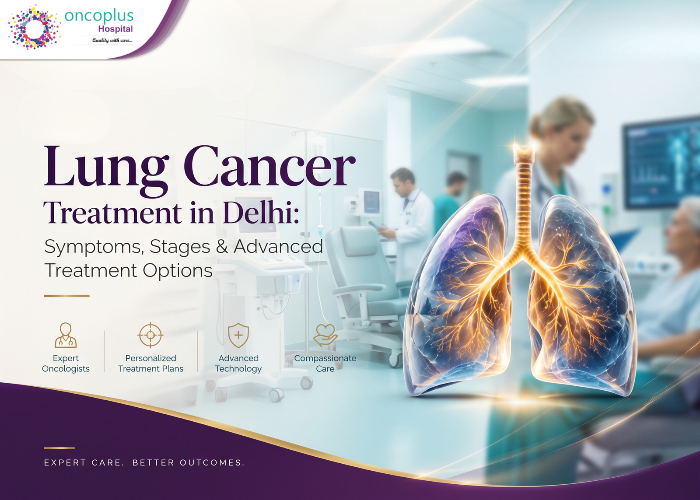
Lung Cancer Treatment in Delhi: Symptoms, Stages & Advanced Treatment Options
- onco
- October 15, 2026
Lung Cancer is a cancer that starts as an abnormal growth of cells in the lungs. The lungs are two spongy organs in the chest that regulate breathing. When it comes to the leading cause of cancer deaths worldwide, lung cancer stands out as the number one.
Recognising lung cancer symptoms early can be vital, as it greatly improves survival rates. When diagnosed earlier, the 5-year survival rate exceeds 60%, and curative treatments like surgery are highly effective.
Delhi offers some of the best access to advanced cancer care, with services like surgery, chemotherapy, radiation therapy, targeted therapy, and immunotherapy.
In this blog, you will learn about common symptoms, stages, and advanced care options for patients seeking treatment for lung cancer.
What are the Common Lung Cancer Symptoms?
Normally, lung cancer doesn’t show symptoms early on. It shows once the lung cancer has advanced to the later stage.
Early Symptoms of Lung Cancer
One early symptom of Lung Cancer is a chronic or worsening cough. Other possible signs can include chest discomfort, shortness of breath, recurring respiratory infections and unexplained fatigue.
Advanced Symptoms of Lung Cancer
As lung cancer progresses, symptoms may become more prominent. These can include coughing up blood, unexplained weight loss, loss of appetite, persistent chest pain, and increased difficulty in breathing. If cancer spreads to other parts of the body, additional symptoms may show depending on the organs affected.
When Should You Consult a Doctor?
Lung cancer is classified into different stages based on the tumour size, how much it has spread to nearby lymph nodes, and whether it has reached other parts of the body. This classification helps doctors choose the most appropriate treatment.
Stage 1 Lung Cancer
The cancer is limited to the lung and has not spread to the nearby lymph nodes. Surgery or radiation therapy may be considered.
Stage 2 Lung Cancer
The cancer may have grown in size or spread to nearby lymph nodes. Treatment typically focuses on surgery and additional therapies.
Stage 3 Lung Cancer
The cancer has spread to lymph nodes or nearby areas around the chest. Treatment may include chemotherapy, radiation therapy, immunotherapy, or surgery in selected areas.
Stage 4 Lung Cancer
The cancer in this stage has spread to distant organs. Treatment may include targeted therapy, immunotherapy, chemotherapy, and other approaches to control the disease and manage symptoms.
How is Lung Cancer Diagnosed?
The diagnosis of Lung Cancer involves several tests to identify abnormal growths, confirm the presence of cancer, and check how far the disease has spread. Doctors may recommend imaging tests, a biopsy, and molecular testing based on the patient’s symptoms and clinical findings.
Imaging Tests
Chest X-rays and CT scans help doctors identify suspicious lung growth and determine its size and location. PET scans can help check if the cancer has spread.
Biopsy
In a Biopsy, doctors collect a tissue sample for laboratory examination to confirm whether cancer cells are present and identify the type of lung cancer.
Molecular and Biomarker Testing
These tests identify specific genetic changes or proteins in cancer cells, helping doctors decide whether targeted therapy or immunotherapy is appropriate.
What are the Lung Cancer Treatment Options?
Lung cancer treatment entirely depends on the type and stage of the disease, the patient’s current health status, and the results of diagnostic and molecular tests. Following are some of the most common Lung Cancer Treatment options,
Surgery
Surgery is usually recommended for certain patients with early-stage lung cancer. The procedure removes the tumour and, when necessary, the affected part of the lung and nearby lymph nodes.
Chemotherapy
Chemotherapy uses medicines to destroy cancer cells or to slow down their growth. It can be done before or after surgery, alongside radiation therapy, or to manage advanced lung cancer.
Radiation Therapy
Radiation therapy involves high-energy radiation to destroy cancer cells. It is often used as a primary treatment, in combination with other therapies, or to relieve symptoms.
Targeted Therapy
Targeted therapy uses medicines that target specific genetic changes or molecular markers in cancer cells. Molecular testing helps doctors check whether these treatments are suitable.
Immunotherapy
Immunotherapy helps the immune system recognise and attack cancer cells. Its administration mainly depends on factors like the type and stage of cancer and biomarker results.
Choosing the Right Treatment
To choose the right treatment, a multidisciplinary oncology team evaluates the patient’s condition and test results. Not every treatment is suitable for every patient.
How is Lung Cancer treatment decided?
To determine the right lung cancer treatment, doctors evaluate several medical factors rather than relying on a single approach. Doctors consider the cancer type, stage, molecular test results, and the patient’s overall health before they recommend a treatment plan.
Treatment based on Cancer Type and Stage
Treatment approaches differ between small cell and non-small cell lung cancer. The stage of the disease also helps determine whether surgery, radiation therapy, or systemic treatments are needed.
Role of Molecular Testing
Molecular and biomarker tests can identify specific characteristics of cancer cells and help guide targeted therapy or immunotherapy decisions.
Personalised Treatment Approach
An oncology team evaluates the potential benefits, risks, and side effects of available treatments to create a plan suited to the patient’s needs.
How to Choose the Best Lung Cancer Treatment in Delhi?
Choosing the best lung cancer treatment in Delhi involves evaluating the quality of medical care, the oncology team’s expertise, and the availability of appropriate treatment facilities. Patients should consider the following factors before deciding.
Experience of the Oncology Team
Choose qualified cancer specialists with experience treating the specific type and stage of lung cancer.
Advanced Diagnostic and Treatment Facilities
Check that you can access facilities like imaging, biopsy, molecular testing, radiation therapy, and other modern treatment options.
Multi-disciplinary Cancer Care
Make sure a team of medical oncologists, surgical oncologists, radiation oncologists, and other specialists can help coordinate treatment.
Why Do Patients Need a Second Opinion?
A second opinion can help patients understand their diagnosis, compare treatment options and make well-informed decisions about their care.
Conclusion
When it comes to lung cancer care, early diagnosis and appropriate treatment planning play a huge role. Treatment options depend on the patient’s specific needs and may include surgery, chemotherapy, targeted therapy, immunotherapy, etc. Patients seeking the best lung cancer treatment in Delhi should consult qualified cancer specialists for optimal medical care.
Frequently Asked Questions
- Can Lung Cancer be Treated Successfully?
The outcome of a lung cancer treatment depend on the type and stage of cancer, the patient’s overall health and response to treatment.
- What is the Best Treatment for Lung Cancer?
No single treatment works best for every patient. The options include surgery, chemotherapy, radiation therapy, targeted therapy and immunotherapy. Doctors recommend treatment options based on cancer type, stage, molecular test results, and the patient’s overall health.
- What are the Early Symptoms of Lung Cancer?
Early cancer may not cause noticeable symptoms. Major warning signs include chronic cough, chest discomfort, breathlessness, sudden weight loss and coughing up blood. A healthcare professional should evaluate highly concerning symptoms.
- Is Advanced Lung Care Treatment available in Delhi?
Delhi has access to specialised cancer care, including diagnostic testing, chemotherapy, radiation therapy, targeted therapy and immunotherapy. However, the availability of specific treatments depends on the healthcare facility, the patient’s diagnosis and clinical suitability.
- How to Choose the Right Lung Cancer Specialist in Delhi?
Consider the specialist’s qualifications, overall experience treating the relevant cancer type, access to diagnostic facilities, and ability to coordinate multidisciplinary care. Patients can also seek a second opinion to review their diagnosis and treatment options.
Recent Posts
-

Pancreatic Cancer Treatment: Symptoms, Stages, Treatment Options & Prognosis
September 25, 2026
-
How to Boost Immune System Recovery After Chemo Naturally
September 21, 2026
-
Mouth Cancer Treatment: Surgery, Radiation or Chemotherapy?
September 14, 2026