Pancreatic Cancer Treatment: Symptoms, Stages, Treatment Options & Prognosis
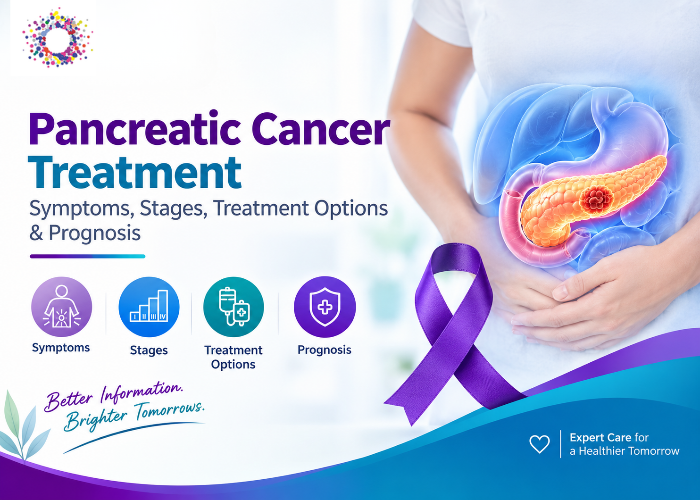
Pancreatic Cancer Treatment: Symptoms, Stages, Treatment Options & Prognosis
- onco
- September 25, 2026
Pancreatic cancer is a serious disease that develops in the tissues of the pancreas. Because early disease may cause few or no noticeable symptoms, diagnosis can sometimes occur after the cancer has progressed. Understanding Pancreatic Cancer Symptoms, stages, available treatments and factors affecting prognosis can help patients and families make informed decisions with their cancer care team.
At Oncoplus Hospital, comprehensive Cancer Treatment Services are designed around the patient’s diagnosis, stage, overall health and individual treatment needs.
What Is Pancreatic Cancer?
The pancreas is a gland located behind the stomach that plays an important role in digestion and blood-sugar regulation. Pancreatic cancer occurs when abnormal cells grow uncontrollably in pancreatic tissue.
The most common type is pancreatic ductal adenocarcinoma. Other pancreatic tumors, such as pancreatic neuroendocrine tumors, can behave differently and may have different treatment approaches and prognoses.
Pancreatic Cancer Symptoms
Early pancreatic cancer may not produce obvious symptoms. As the disease develops, possible symptoms include:
- Yellowing of the skin or eyes (jaundice)
- Upper or middle abdominal pain that may extend to the back
- Unexplained weight loss
- Reduced appetite
- Fatigue or weakness
- Dark urine or pale stools
- Nausea or vomiting
- Gas or bloating
- Itching associated with jaundice
- Swelling of the legs in some cases
New-onset diabetes can sometimes occur with pancreatic cancer, although most people who develop diabetes do not have pancreatic cancer. Therefore, symptoms should always be evaluated by a qualified medical professional rather than assumed to indicate cancer.
How Is Pancreatic Cancer Diagnosed and Staged?
Doctors may use imaging and other diagnostic tests to identify the tumor and determine whether it has spread. Staging is important because it helps determine whether surgery is possible and which treatments may be appropriate.
Stages of Pancreatic Cancer
Pancreatic cancer is generally described from Stage 0 through Stage IV:
- Stage 0: Abnormal cells are present in the pancreatic lining but have not become invasive cancer.
- Stage I: Cancer is limited to the pancreas, with the stage depending largely on tumor size.
- Stage II: The tumor may be larger or may have spread to a limited number of nearby lymph nodes.
- Stage III: Cancer may involve major blood vessels near the pancreas or several nearby lymph nodes.
- Stage IV: Cancer has spread to distant organs, such as the liver, lungs or peritoneal cavity.
Doctors also classify pancreatic cancer according to whether it is resectable, borderline resectable, locally advanced or metastatic. This classification is particularly important when considering surgery.
Pancreatic Cancer Treatment Options
The treatment plan depends on factors such as cancer stage, tumor location, resectability, overall health and treatment goals. More than one treatment may be used as part of a multidisciplinary approach.
- Surgery
Surgery offers the possibility of removing the cancer when the tumor can be completely resected.
Depending on the tumor’s location, procedures may include:
- Whipple procedure (pancreaticoduodenectomy) for selected tumors in the pancreatic head
- Distal pancreatectomy for certain tumors in the body or tail
- Total pancreatectomy in selected situations
Pancreatic surgery is complex and requires careful assessment of the tumor’s relationship with nearby blood vessels and other structures.
- Chemotherapy
Chemotherapy uses medicines to destroy or control cancer cells. It may be given before surgery, after surgery, or as the main treatment when surgery is not possible.
The specific chemotherapy regimen depends on the patient’s condition and the characteristics of the cancer.
- Radiation Therapy
Radiation therapy uses high-energy radiation to target cancer cells. In selected patients, it may be combined with chemotherapy or considered around surgery. Its role depends on the stage, tumor location and treatment strategy.
- Targeted Therapy and Biomarker-Based Treatment
Some pancreatic cancers contain specific genetic or molecular changes that may make targeted treatments appropriate. Molecular or genetic testing can therefore be considered in suitable patients, particularly in advanced disease.
- Supportive and Palliative Care
Palliative care is not limited to the final stage of cancer. It can be integrated with cancer treatment to help manage pain, nausea, nutritional problems, anxiety and other symptoms while supporting quality of life.
Pancreatic Cancer Prognosis
Prognosis varies significantly from person to person. Important factors include:
- Stage at diagnosis
- Whether the tumor can be completely removed
- Lymph-node involvement
- Tumor grade
- Overall health
- Response to treatment
- Certain tumor biomarkers or genetic changes
According to the latest NCI data, five-year relative survival for pancreatic cancer diagnosed during 2015–2021 was 44% for localized disease, 17% for regional disease and 3% for distant disease. These are population statistics, not predictions for an individual patient, and newer treatments may not yet be fully represented in historical data.
When Should You See a Cancer Specialist?
Persistent jaundice, unexplained weight loss, ongoing abdominal or back pain, or other concerning symptoms should be medically evaluated. These symptoms can have many causes and do not automatically mean pancreatic cancer.
If pancreatic cancer is diagnosed, discussing the pathology, scans, stage and treatment options with a specialist can help establish an individualized care plan. A second opinion may also be appropriate for some patients.
Frequently Asked Questions
What is the most common symptom of pancreatic cancer?
There is no single symptom that occurs in every patient. Jaundice, abdominal or back pain, unexplained weight loss, appetite loss and fatigue are among the commonly reported symptoms as pancreatic cancer develops.
Is pancreatic cancer curable?
Some pancreatic cancers, particularly those that can be completely removed surgically, may be treated with curative intent. However, prognosis depends on stage, resectability, tumor characteristics and response to treatment.
What treatment is used for Stage 4 pancreatic cancer?
Stage 4 pancreatic cancer has spread to distant parts of the body. Treatment commonly focuses on systemic therapies such as chemotherapy, with targeted treatment considered for appropriate molecular findings. Supportive and palliative care can also help control symptoms and maintain quality of life.
Where can I get Pancreatic Cancer Treatment in Delhi?
Patients looking for Pancreatic Cancer Treatment in Delhi should consider a cancer centre where diagnosis, staging, medical oncology, surgical assessment, radiation therapy and supportive care can be coordinated according to individual needs.
Get Expert Cancer Care at Oncoplus Hospital
A pancreatic cancer diagnosis can be overwhelming, but understanding the disease, stage and available treatment options is an important first step. Oncoplus Hospital provides comprehensive Cancer Treatment in Delhi, with treatment planning based on the patient’s diagnosis and clinical needs.
If you or a loved one has symptoms or has been diagnosed with pancreatic cancer, consult a qualified cancer specialist for timely evaluation and an individualized treatment plan.
Recent Posts
-

Pancreatic Cancer Treatment: Symptoms, Stages, Treatment Options & Prognosis
September 25, 2026
-
How to Boost Immune System Recovery After Chemo Naturally
September 21, 2026
-
Mouth Cancer Treatment: Surgery, Radiation or Chemotherapy?
September 14, 2026
-

Can Early Signs of Stomach Cancer Improve Treatment Success?
August 27, 2026