Breast Cancer Treatment for Newly Diagnosed Patients
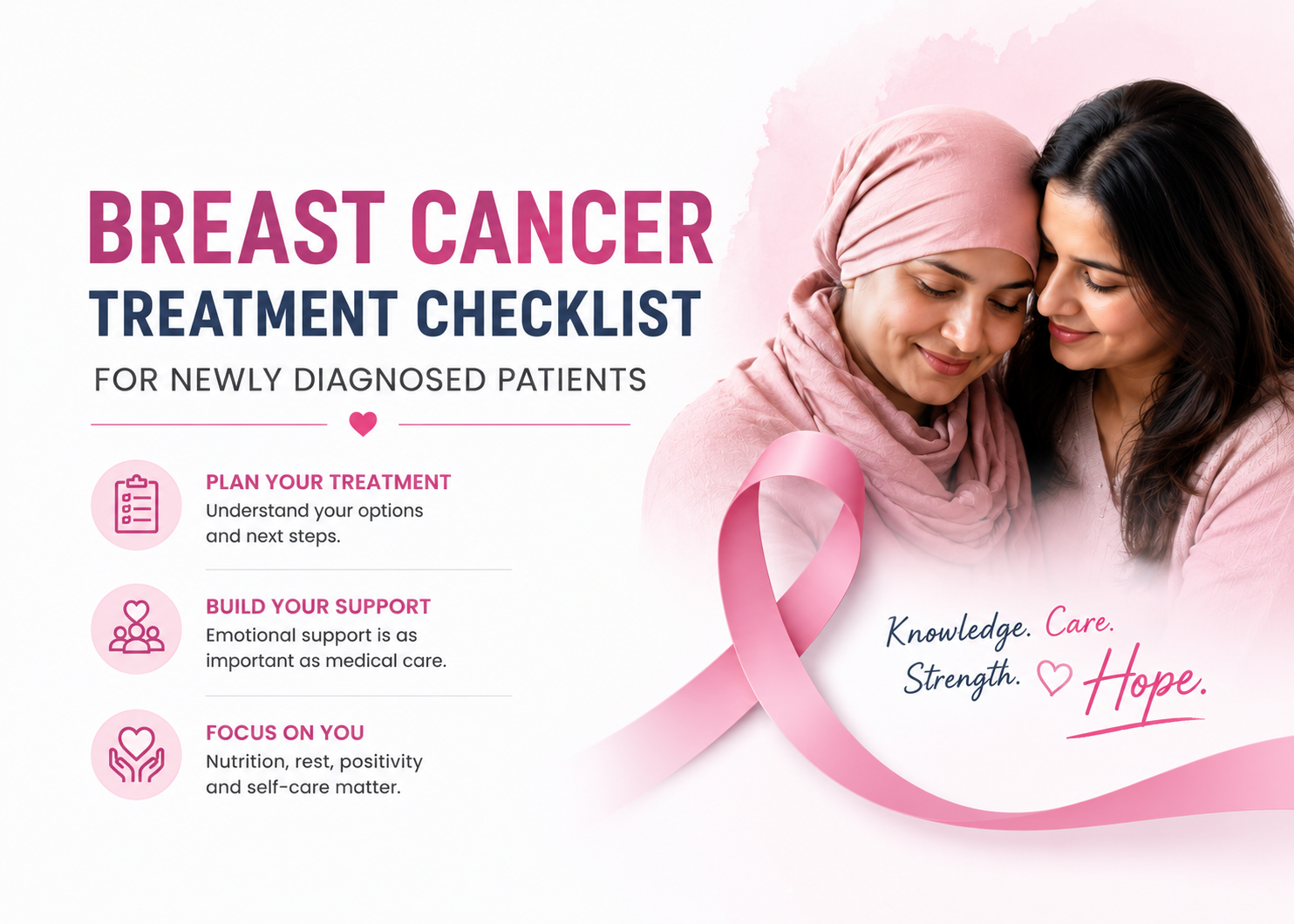
Breast Cancer Treatment for Newly Diagnosed Patients
- onco
- July 24, 2026
The Day Your Life Forks in Two
You walked into the clinic expecting a routine check-up. Maybe you noticed a small lump while getting ready one morning, or perhaps your mammogram report recommended additional tests. Whatever brought you there, everything changed the moment your doctor gently said, “The biopsy confirms breast cancer.”
In an instant, life feels divided into two chapters—before the diagnosis and after it.
You may leave the hospital carrying reports you don’t fully understand, wondering what happens next. Your phone keeps ringing with concerned family members, while your mind is flooded with questions about treatment, recovery, and the future. Hearing terms like chemotherapy, radiation, surgery, or treatment planning can feel overwhelming, especially when you’re still processing the diagnosis.
If this is where you are today, know that you’re not alone.
This Breast Cancer Treatment Checklist for Newly Diagnosed Patients is designed to guide you through the first steps after diagnosis. From understanding your test results to preparing for consultations and making informed treatment decisions, this checklist will help you feel more organized, confident, and empowered throughout your breast cancer treatment journey.
Who This Is For
This checklist is for the woman — probably 35 to 60, working, managing a household, maybe caring for aging parents or teenage kids — who just got diagnosed with breast cancer in Delhi. You’re the kind of person who makes lists, who organizes family vacations, who keeps track of everyone’s doctor appointments. You’re capable and competent, and right now you feel completely unmoored. This is for you. We’re going to get you organized.
Immediate Steps (Do These in the First Week)
Get a dedicated notebook and folder. Not your phone notes. A real notebook. You’ll be shocked how much information gets thrown at you, and your brain is currently not operating at full capacity. Write down everything. Dates, doctor names, test results, questions you think of at 3 AM. The folder holds all your reports, prescriptions, and insurance papers.
Designate a “point person.” Pick one trusted person — your sister, your best friend, your husband — who comes to important appointments with you. Their job is to listen, take notes, and ask the questions you forget to ask because you’re too busy processing bad news. They can also help coordinate practical stuff — who’s picking up the kids, who’s bringing dinner, who’s handling work calls.
Get a second opinion. This isn’t about distrusting your doctor. It’s about making sure you’re starting down the right path. Breast cancer treatment has a lot of variables, and different oncologists might suggest different approaches. At Oncoplus, we encourage second opinions. We’ve had patients come in with a treatment plan from another center, and sometimes we agree completely. Other times, we suggest tweaks — maybe a different order of treatments, or a clinical trial they hadn’t heard about. Either way, you deserve to feel sure.
Understand your pathology report. This is the most important document you’ll get. It tells you: – The type of breast cancer (ductal, lobular, etc.) – Grade (how aggressive the cells look) – Stage (how far it’s spread) – Hormone receptor status (ER/PR positive or negative) – HER2 status (positive or negative)
These details determine your entire treatment plan. If your doctor hasn’t explained each one, ask. If you still don’t get it, ask again. This is not the time to nod politely and pretend you understand.
Before Treatment Starts (The Next Few Weeks)
See a dentist. Sounds random, right? But some breast cancer treatments — especially certain chemo drugs and bisphosphonates — can mess with your oral health. Get any needed dental work done now, because you might not be able to during treatment.
Get your eyes checked. Some treatments affect vision. Establish a baseline now so you can track changes later.
Talk about fertility if it applies to you. If you’re under 45 and might want kids (or more kids) in the future, this conversation needs to happen before treatment starts. Some chemo can damage your ovaries. There are options — egg freezing, ovarian suppression — but they’re time-sensitive. Don’t wait.
Get your finances in order. Cancer treatment is expensive, even with insurance. Ask your hospital’s financial counselor about: – What your insurance covers and what it doesn’t – Payment plans – Government schemes or charitable programs you might qualify for – Keeping your job — what are your rights? Can you work during treatment?
Tell work on your own terms. You don’t have to announce it to everyone immediately. But you probably need to tell your boss and HR, because you’ll need time off for appointments and treatment. Know your rights. In India, you’re entitled to medical leave, and many companies have policies for long-term illness. Don’t let fear of job loss keep you from getting treatment.
Organize your support system. People want to help. They just don’t know how. Be specific: – “Can you pick up my daughter from school on Tuesdays and Thursdays?” – “Can you bring dinner on chemo days?” – “Can you drive me to radiation appointments?”
At Oncoplus, we’ve seen patients build incredible support networks — neighbors rotating meal deliveries, college friends flying in from Mumbai to sit through chemo, WhatsApp groups coordinating rides. Delhi can feel like a chaotic, impersonal city sometimes, but when you need it, the community shows up.
Read More Blog: Breast Cancer in Young Women: Hidden Symptoms, Early Detection & Best Treatment in Delhi
During Treatment: The Day-to-Day Stuff
Keep a symptom diary. Every day, jot down how you’re feeling — energy level, nausea, mood, sleep, anything weird. This helps your doctor adjust your care, and it helps you notice patterns. (“Oh, I always feel worst on day 3 after chemo. Good to know.”)
Move your body. Even when you don’t feel like it. Even if it’s just a 10-minute walk around your block in Vasant Kunj. Exercise reduces fatigue, improves mood, helps with side effects, and might even improve treatment outcomes. Ask your doctor what’s safe for you.
Eat what you can. Your taste will probably change. Foods you loved might taste metallic or just wrong. Don’t force yourself to eat “perfectly.” Focus on getting enough protein and calories to keep your strength up. If all you can stomach is dal khichdi for a week, that’s fine. Eat the khichdi.
Protect yourself from infections. Chemo lowers your white blood cell count, which means your immune system is basically on vacation. Avoid crowded places during peak hours. Wear a mask. Wash your hands like it’s your job. If you get a fever over 100.4°F (38°C), call your doctor immediately. Don’t wait.
Ask for help with side effects. Don’t suffer in silence. Modern medicine has gotten really good at managing chemo side effects — there are drugs for nausea, creams for skin reactions, solutions for mouth sores. If something’s bothering you, speak up. Your quality of life matters.
The Mental and Emotional Side (Don’t Skip This)
Feel your feelings. You’re going to feel angry, sad, terrified, numb, and sometimes weirdly fine — sometimes all in the same hour. It’s all normal. You don’t have to be brave every second. Cry if you need to. Yell if you need to. This is hard, and you’re allowed to acknowledge that.
Consider counseling. Many cancer centers, including Oncoplus, have psychologists who specialize in oncology. They’re not there to fix you — you’re not broken. They’re there to help you process what you’re going through and develop coping strategies. Some people find it incredibly helpful.
Connect with others who get it. Support groups — whether in-person in Delhi or online — can be lifelines. There’s something powerful about sitting with people who truly understand the 3 AM terror, the weird side effects, the complicated relationship with your changing body. You’re not alone in this, even when it feels like it.
Keep some normalcy. Watch your favorite shows. Read books that have nothing to do with cancer. Have conversations that aren’t about your diagnosis. Your life is bigger than this disease, and holding onto pieces of your old self helps you get through.
After Treatment: The New Normal
Follow-ups are forever (sort of). For the first few years, you’ll see your oncologist every few months. Then it stretches to every six months, then yearly. These appointments include physical exams, blood tests, and sometimes imaging. They’re non-negotiable, even when you feel great — especially when you feel great.
Know the signs of recurrence. New lumps, unexplained pain, persistent cough, unusual headaches, weight loss without trying — these are worth calling about. Don’t panic at every ache (your body will have plenty of random aches), but don’t ignore persistent symptoms either.
Deal with the emotional aftermath. Finishing treatment is weirdly hard. You’ve spent months in “battle mode,” and suddenly the safety net of constant medical care is gone. Many women feel anxious, depressed, or just lost. This is so common it has a name: “post-treatment syndrome.” Talk to your doctor about it. There are resources.
Reclaim your body. Your body has been through a lot. It might look different, feel different, work differently. Some women embrace their scars as badges of survival. Others struggle with body image. However you feel is valid. Give yourself time and grace.
The Bottom Line
A breast cancer diagnosis feels like someone dropped you in the middle of the ocean with no boat and no map. But here’s what you need to know: there is a map. There are boats. And there are people — at Oncoplus, at other hospitals, in your community, in your family — who will help you navigate.
This checklist is your starting point. It’s not everything, and it’s not one-size-fits-all. But it gives you a framework. It helps you feel less like a passenger and more like a driver. Because that’s what you are — the driver of your own care. The doctors are your navigators, your mechanics, your pit crew. But you’re behind the wheel.
You’ve got a long road ahead, but it’s a road thousands of women have traveled before you. And they’ve made it to the other side. You will too.
Recent Posts
-

Can Early Signs of Stomach Cancer Improve Treatment Success?
August 27, 2026
-

Latest Lymphoma Cancer Treatment Options in 2026
August 20, 2026
-

Prostate Cancer Hospital in Delhi: Symptoms, Diagnosis & Care
August 14, 2026
-
How to Recognize Symptoms of Stomach Cancer in Adults
August 5, 2026