How to Recognize Symptoms of Stomach Cancer in Adults
How to Recognize Symptoms of Stomach Cancer in Adults
- onco
- August 5, 2026
When Your Stomach Is Trying to Tell You Something
We’ve all experienced stomach discomfort after a heavy meal. Maybe it was a wedding feast, a spicy dinner, or simply eating more than usual. In most cases, the discomfort fades within a few hours or a day.
But what if your stomach doesn’t feel normal for weeks? What if you’re losing weight without trying, feeling full after just a few bites, or your appetite has suddenly disappeared?
These symptoms may be caused by common digestive problems such as acidity, gastritis, or ulcers. However, when they persist or continue to worsen, they should never be ignored. In some cases, they could be early signs of stomach cancer.
The challenge is that stomach cancer often develops quietly. Its early symptoms closely resemble everyday digestive issues, making it difficult to recognize until the disease has progressed. Understanding the warning signs can help you seek medical attention at the right time.
What Is Stomach Cancer?
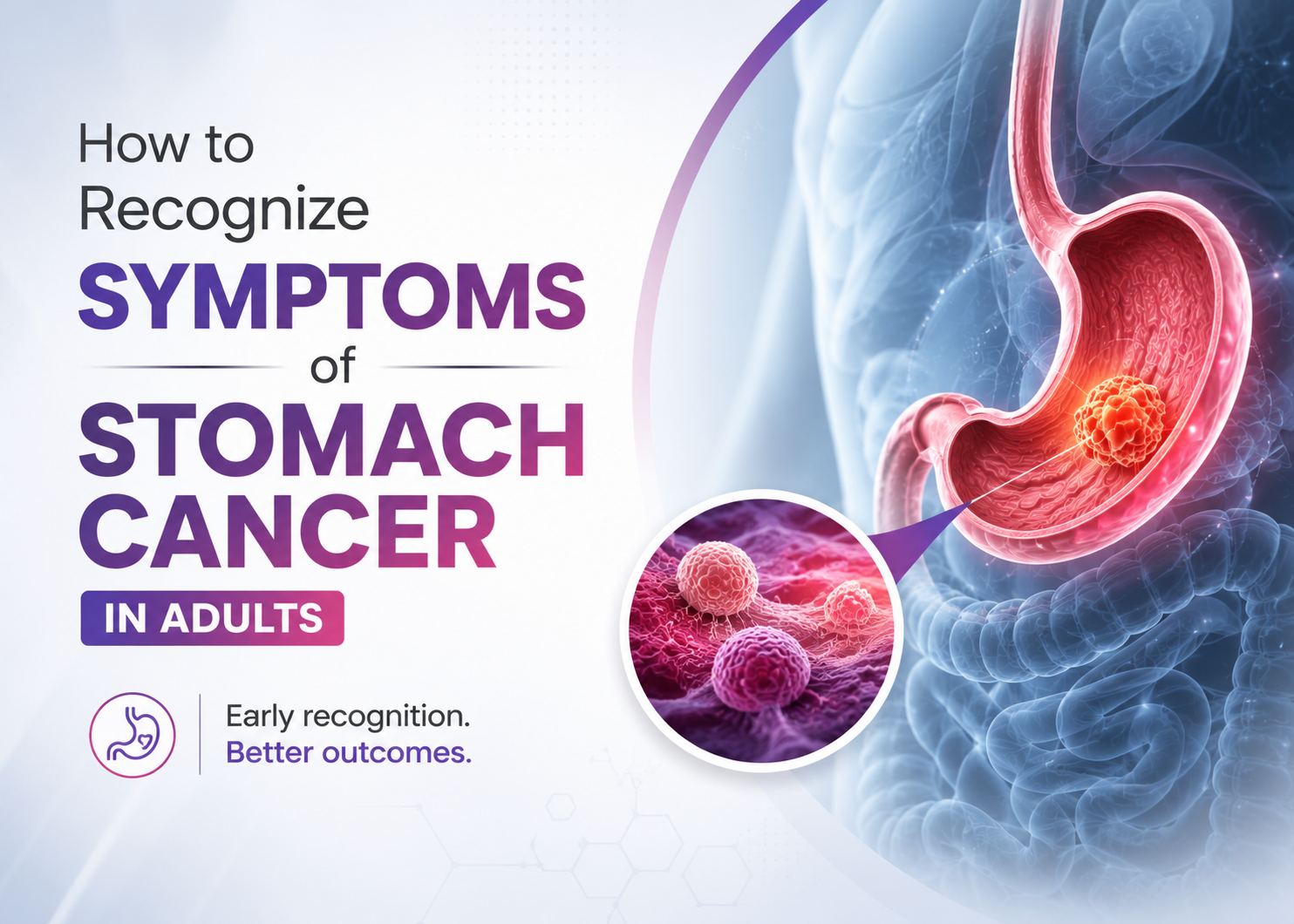
Stomach cancer, also known as gastric cancer, develops when abnormal cells in the lining of the stomach begin to grow uncontrollably. Over time, these cells may form a tumor and can spread to nearby lymph nodes or other parts of the body if left untreated.
Most stomach cancers develop gradually over several years. During the early stages, many people experience few or no noticeable symptoms, which is why early diagnosis can be challenging.
Although stomach cancer is less common than some other cancers, it remains a significant health concern in India. Early detection plays an important role in improving treatment outcomes.
Early Symptoms of Stomach Cancer
Many early symptoms of stomach cancer are similar to those caused by common digestive disorders. The difference is that cancer-related symptoms usually persist or gradually worsen over time.
You should consult a doctor if you experience any of the following symptoms that last for several weeks:
- Persistent indigestion or heartburn that does not improve with medication.
- Feeling unusually full after eating a small amount of food.
- Loss of appetite without a clear reason.
- Unexplained weight loss.
- Ongoing discomfort or pain in the upper abdomen.
- Frequent bloating after meals.
- Persistent nausea or repeated vomiting.
- Difficulty swallowing, especially if it gradually becomes worse.
- Black, tarry stools or blood in vomit, which require immediate medical attention.
- Constant fatigue or weakness that may result from anemia caused by slow internal bleeding.
Having one or more of these symptoms does not necessarily mean you have stomach cancer. However, persistent symptoms should always be evaluated by a healthcare professional.
Who Is at Higher Risk?
Certain factors can increase the likelihood of developing stomach cancer, including:
- Age above 55 years
- Infection with Helicobacter pylori (H. pylori)
- A family history of stomach cancer
- Diets high in salted, smoked, or preserved foods
- Smoking or heavy alcohol consumption
- Obesity
- Previous stomach surgery
- Certain inherited genetic conditions
Having one or more risk factors does not mean you will develop stomach cancer, but regular medical check-ups and timely evaluation of symptoms become even more important.
When Should You See a Doctor?
Do not ignore persistent digestive symptoms. You should consult a doctor if you experience:
- Indigestion lasting more than two to three weeks
- Unexplained weight loss
- Difficulty swallowing
- Persistent vomiting
- Blood in vomit or black stools
- Continuous stomach pain or discomfort
- Feeling full after eating very little
Seeking medical advice early can help identify the cause and, if necessary, detect stomach cancer at a stage when treatment is more effective.
How Is Stomach Cancer Diagnosed?
Your doctor may recommend one or more of the following tests:
Medical History and Physical Examination
Your doctor will review your symptoms, family history, lifestyle, and overall health.
Blood Tests
These help detect anemia and assess overall organ function.
Upper GI Endoscopy
An upper gastrointestinal endoscopy is considered the gold standard for diagnosing stomach cancer in Delhi. A thin, flexible tube with a camera is gently passed through the mouth to examine the stomach lining. If any suspicious area is found, a biopsy can be performed during the procedure.
Imaging Tests
CT scans, MRI scans, or PET scans help determine whether cancer has spread beyond the stomach.
Treatment Options for Stomach Cancer
Treatment depends on the stage of the disease, the patient’s overall health, and the location of the tumor.
Common treatment options include:
Surgery
If detected early, surgery may remove part or all of the stomach along with nearby lymph nodes.
Chemotherapy
Chemotherapy may be given before surgery, after surgery, or as the primary treatment when surgery is not possible.
Radiation Therapy
Radiation may be combined with chemotherapy in selected cases to improve treatment outcomes.
Targeted Therapy and Immunotherapy
Advanced stomach cancers may benefit from targeted medicines or immunotherapy based on the tumor’s molecular characteristics.
Nutritional Support
Proper nutrition is an essential part of recovery. Patients often require personalized dietary guidance before, during, and after treatment.
Why Choose Oncoplus Hospital for Stomach Cancer Care?
At Oncoplus Hospital, our multidisciplinary cancer team provides comprehensive care for patients with stomach cancer—from early diagnosis to advanced treatment and long-term follow-up.
Our services include:
- Advanced endoscopic evaluation and biopsy
- Experienced surgical oncologists
- Medical oncology and chemotherapy services
- Personalized nutrition counselling
- Multidisciplinary treatment planning
- Compassionate patient-centered care
Our goal is to deliver evidence-based cancer treatment while supporting patients and their families throughout every stage of their journey.
A Story That Highlights the Importance of Early Diagnosis
Ramesh, a 58-year-old businessman, had lived with what he believed was “acidity” for months. He relied on over-the-counter antacids and assumed his symptoms were caused by spicy food.
Over time, he began feeling full after just a few bites and unintentionally lost several kilograms. His family encouraged him to consult a specialist.
An upper GI endoscopy revealed stomach cancer. Fortunately, it was diagnosed before spreading to distant organs. After undergoing chemotherapy and surgery, Ramesh gradually returned to his daily routine and now continues regular follow-up visits.
While this is a fictional example, it reflects a situation many patients experience. Persistent symptoms should never be ignored.
Takeaway
Stomach cancer often develops silently, and its early symptoms can easily be mistaken for common digestive problems.
If you have persistent indigestion, unexplained weight loss, loss of appetite, difficulty swallowing, or ongoing stomach discomfort, consult a qualified healthcare professional without delay. Early diagnosis significantly improves the chances of successful treatment.
At Oncoplus Hospital, we are committed to providing comprehensive stomach cancer diagnosis, treatment, and supportive care with compassion and expertise. If you have concerns about persistent digestive symptoms, our experienced oncology team is here to help you take the next step toward better health.
Frequently Asked Questions
What are the first symptoms of stomach cancer?
Persistent indigestion, feeling full quickly, loss of appetite, unexplained weight loss, bloating after meals, and ongoing stomach discomfort are among the common early symptoms.
Is stomach cancer curable?
Yes. When diagnosed at an early stage, stomach cancer can often be treated successfully through surgery, chemotherapy, targeted therapy, immunotherapy, or a combination of these treatments.
How is stomach cancer diagnosed?
The primary diagnostic test is an upper GI endoscopy with biopsy. Additional imaging tests such as CT scans, MRI, or PET scans help determine the stage of the disease.
Can stomach cancer be prevented?
While not all cases can be prevented, maintaining a healthy lifestyle, avoiding tobacco, limiting alcohol intake, treating H. pylori infection, and eating a balanced diet rich in fruits and vegetables may help reduce the risk.
Medical Disclaimer: This article is intended for educational purposes only and should not replace professional medical advice, diagnosis, or treatment. If you experience persistent digestive symptoms, consult a qualified healthcare professional for an accurate evaluation.
Recent Posts
-

Pancreatic Cancer Treatment: Symptoms, Stages, Treatment Options & Prognosis
September 25, 2026
-
How to Boost Immune System Recovery After Chemo Naturally
September 21, 2026
-
Mouth Cancer Treatment: Surgery, Radiation or Chemotherapy?
September 14, 2026