Tonsil Cancer Treatment in Delhi: Symptoms & Care Guide
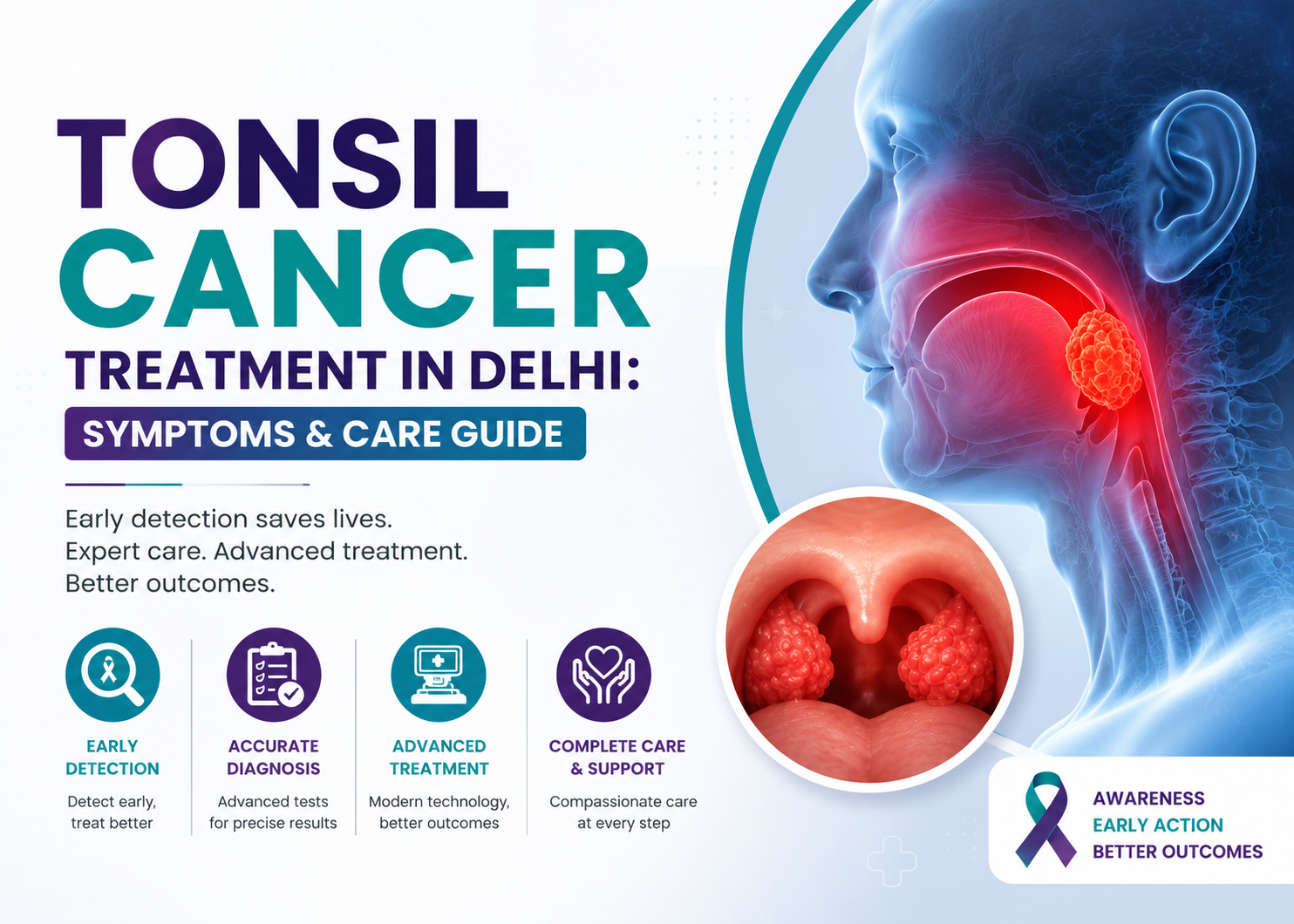
Tonsil Cancer Treatment in Delhi: Symptoms & Care Guide
- onco
- July 17, 2026
What This Article Is About (And Why You’re Here)
Maybe you’ve had a sore throat that just won’t quit. Maybe you felt a weird lump on one side of your neck while getting ready for work near Connaught Place. Or maybe a friend mentioned something about tonsil cancer, and now you’re lying awake at 2 AM googling symptoms. Whatever brought you here, you’re probably a little scared and a lot confused. That’s completely normal.
This article walks you through what tonsil cancer treatment actually is, what symptoms to watch for, how doctors figure out what’s going on, and what treatment looks like — especially if you’re living in Delhi and trying to figure out where to go. By the end, you’ll know the warning signs, understand your options, and feel way less lost about the whole thing.
What Even Are Tonsils, and Why Would They Get Cancer?
Your tonsils are those two little lumps sitting at the back of your throat. You probably only think about them when you get a bad cold or strep throat. But they’re actually part of your immune system — like tiny security guards standing at the entrance of your body, catching germs before they can cause trouble.
Sometimes, though, the cells in your tonsils start growing weirdly. Instead of doing their normal job, they multiply out of control. That’s tonsil cancer treatment in delhi. It falls under a bigger category called “oropharyngeal cancer,” which is just a fancy way of saying “cancer in the middle part of your throat.”
Here’s something that surprises a lot of people: you can get tonsil cancer even if you had your tonsils removed as a kid. Tiny bits of tonsil tissue can get left behind, and cancer can develop there too. So don’t assume you’re off the hook just because you had a tonsillectomy back in school.
The Symptoms That Shouldn’t Be Ignored
Most of the time, a sore throat is just a sore throat. You gargle with warm salt water, take some rest, and you’re fine in a few days. But tonsil cancer symptoms stick around. They don’t care about your home remedies.
Here’s what to watch for:
- A sore throat that lasts more than two weeks. Not the kind that comes and goes. The kind that just sits there, annoying you every time you swallow your morning chai.
- One tonsil looks way bigger than the other. This is a big red flag. Most infections affect both sides equally. If one side is swollen and the other looks totally fine, that’s worth getting checked.
- A lump in your neck. A lot of people first notice this while shaving or putting on makeup. It’s usually painless, which is actually more concerning than a painful lump. Painless lumps in the neck are classic signs that something’s up with the lymph nodes.
- Trouble swallowing. Food feels like it’s getting stuck, or swallowing hurts way more than it should.
- Ear pain on one side. This is weird but true — tonsil cancer can cause referred pain to your ear, even though your ear itself is totally fine.
- A “hot potato” voice. Your voice sounds thick and muffled, like you’re trying to talk with a hot aloo paratha stuffed in your cheek.
- Bleeding from the throat. You might taste blood when you swallow, or cough up small amounts. Not normal.
- Unexplained weight loss. Dropping kilos without trying? That’s your body waving a flag.
A lot of these symptoms look like a regular throat infection at first. That’s why tonsil cancer often gets missed early on. The key difference? Time. A normal infection clears up. Cancer symptoms don’t.
Why This Is Happening to More Young People
Here’s a plot twist: tonsil cancer used to be an “old smoker” disease. But these days, doctors are seeing it in younger people who’ve never touched a cigarette. The reason? HPV — the human papillomavirus.
Yeah, that HPV. The same virus people associate with cervical cancer. It turns out HPV can also infect the throat, usually through oral sex. About 90% of tonsil cancers in non-smokers are caused by HPV. The good news? HPV-related tonsil cancer actually responds better to treatment and has a higher cure rate than the smoking-related kind. So if you’re diagnosed with HPV-positive tonsil cancer, your outlook is generally better.
That said, smoking and heavy drinking still matter. If you smoke and have HPV, your risk gets worse, not better. And if you’re still smoking during treatment, you’re basically fighting with one hand tied behind your back.
How Doctors Figure Out What’s Going On
If your symptoms have lasted more than two weeks, your doctor will probably send you to an ENT specialist — someone who knows throats inside and out. Here’s what the diagnostic process usually looks like:
The physical exam. The doctor looks down your throat with a light and a small mirror, or uses a thin tube with a camera (called an endoscope) to get a better view. They’ll also feel your neck for lumps.
Biopsy. This is the only way to know for sure if it’s cancer. They take a tiny sample of the suspicious tissue and look at it under a microscope. It’s usually done under local anesthesia, so you’re awake but numb. Sounds scary, but it’s over pretty quickly.
HPV testing. Since HPV status changes how doctors treat tonsil cancer, they’ll test your biopsy sample for it. This involves looking for something called the p16 marker.
Imaging scans. CT scans, MRI, or PET-CT help doctors see how big the tumor is and whether it’s spread to nearby lymph nodes or other parts of your body. Think of these as the GPS for your cancer — they map out exactly where things stand.
Staging. Once all the tests are done, your cancer gets a “stage” from 1 to 4. Stage 1 means it’s small and hasn’t spread. Stage 4 means it’s grown into nearby areas or traveled to distant organs. The stage determines your treatment plan.
Treatment: What Actually Happens
Treatment depends on the stage, whether it’s HPV-positive or negative, your overall health, and what you want. There’s no one-size-fits-all approach. Here’s the menu:
Surgery. For early-stage tonsil cancer, doctors often remove the tumor through your mouth using robotic tools (called TORS — transoral robotic surgery). It’s minimally invasive, meaning no big neck scars. Sometimes they also remove lymph nodes in your neck to check if the cancer has spread there. Recovery is usually faster than old-school open surgery.
Radiation therapy. High-energy beams target the cancer cells. For small tumors that haven’t spread, radiation alone might do the trick. It’s also used after surgery to zap any leftover cancer cells. Side effects can include a dry mouth, taste changes, and skin irritation — kind of like a really bad sunburn on your neck.
Chemotherapy. Strong medicines that kill fast-growing cells, including cancer cells. For tonsil cancer, chemo is usually combined with radiation (called chemoradiation), especially for more advanced cases. The chemo makes the radiation work better. Side effects include nausea, fatigue, and lowered immunity — so you’ll need to be extra careful about infections.
Immunotherapy and targeted therapy. These are the newer kids on the block. Immunotherapy helps your own immune system recognize and attack cancer cells. Targeted therapy blocks specific proteins that cancer cells need to grow. These are usually reserved for advanced cases or cancers that have come back after initial treatment.
Rehabilitation. Treatment can mess with your ability to swallow or speak. Speech therapists and swallowing specialists help you get back to normal. At Oncoplus, we’ve seen patients go from struggling to swallow water to eating their favorite chole bhature again — it takes work, but it’s absolutely possible.
What Treatment in Delhi Looks Like
If you’re in Delhi, you’re actually in a pretty good spot for cancer care. The city has some of the best oncology centers in India, with access to the same advanced treatments you’d find in Mumbai or Bangalore.
At Oncoplus, we see a lot of tonsil cancer patients who come in worried and leave with a clear plan. Our team includes ENT surgeons, medical oncologists, radiation specialists, and rehabilitation experts who work together — nobody’s figuring this out alone. We also have the robotic surgery setups and precision radiation technology that make a real difference in outcomes.
Delhi’s traffic is terrible, we know. That’s why we try to coordinate appointments so you’re not running from Rajendra Place to AIIMS to Safdarjung in a single day. We get it — you’ve got enough on your plate without adding Metro hopping to the mix.
Living With and After Treatment
Treatment side effects are real, but they’re manageable. Dry mouth is super common after radiation — keep water with you always, and suck on sugar-free candy to stimulate saliva. Taste changes mean your favorite foods might taste weird for a while, but it usually comes back.
Swallowing exercises before and during treatment help a lot. Your speech therapist will teach you stretches and strengthening moves. Do them. Even when you don’t feel like it. They’re boring, but they work.
Regular follow-ups are non-negotiable. Even after you’re “cured,” you’ll need check-ups for years. Imaging scans, blood tests, physical exams — your doctor will keep a close eye on things. Early detection of any recurrence means early treatment, and that’s always better.
The Bottom Line
Tonsil cancer sounds terrifying, and yeah, it’s serious. But it’s also treatable — especially when caught early. If you’ve had symptoms lasting more than two weeks, don’t wait. See a doctor. Get checked. The worst thing you can do is ignore it and hope it goes away.
At Oncoplus, we believe nobody should navigate this alone. Whether you end up coming to us or going somewhere else, we want you to have the right information and the confidence to take the next step. Your health matters. Your peace of mind matters. And getting answers is always better than lying awake at 2 AM wondering.
Recent Posts
-

Can Early Signs of Stomach Cancer Improve Treatment Success?
August 27, 2026
-

Latest Lymphoma Cancer Treatment Options in 2026
August 20, 2026
-

Prostate Cancer Hospital in Delhi: Symptoms, Diagnosis & Care
August 14, 2026
-
How to Recognize Symptoms of Stomach Cancer in Adults
August 5, 2026