Mouth Cancer Treatment: Surgery, Radiation or Chemotherapy?
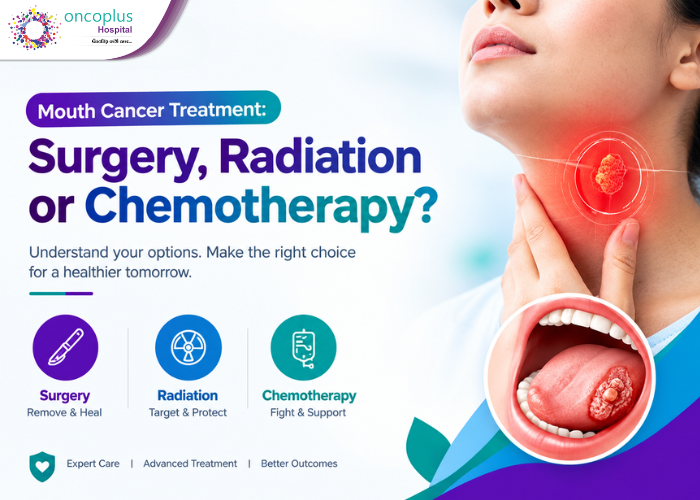
Mouth Cancer Treatment: Surgery, Radiation or Chemotherapy?
- onco
- September 15, 2026
A diagnosis of Mouth Cancer can raise many questions, especially about which treatment is best: surgery, radiation therapy, chemotherapy, or a combination of treatments. The answer is not the same for every patient. Mouth Cancer Treatment is selected according to the cancer’s location, size, stage, lymph-node involvement, overall health and whether the cancer has spread.
For oral cavity cancers, surgery is often an important part of treatment, particularly when the tumour can be removed. Radiation therapy and chemotherapy may be recommended before or after surgery or together in selected advanced cases.
At OncoPlus Hospital, treatment planning for mouth cancer should involve appropriate specialists who can evaluate the disease comprehensively and discuss the potential benefits, risks and impact on speech, swallowing and quality of life.
What Is Mouth Cancer?
Mouth cancer, also called oral cavity cancer, can develop in areas such as:
- Tongue
- Gums
- Inner lining of the cheeks
- Floor of the mouth
- Hard palate
- Lips
- Other parts of the oral cavity
Symptoms can include a persistent mouth ulcer, unexplained bleeding, a lump, pain, difficulty chewing or swallowing, loose teeth, or a patch in the mouth that does not go away.
Persistent symptoms should be evaluated by a qualified healthcare professional rather than being self-diagnosed.
How Is Mouth Cancer Treatment Decided?
There is no single treatment that is suitable for every patient. Doctors generally consider:
- Cancer stage
- Tumour size and location
- Whether lymph nodes are involved
- Whether the cancer has spread
- Overall health and fitness for treatment
- Potential effect on speech and swallowing
- Previous cancer treatment
- The patient’s treatment preferences and goals
A multidisciplinary cancer team may include a cancer surgeon, radiation oncologist, medical oncologist, dental/oral specialist and other healthcare professionals.
Surgery for Mouth Cancer
When Is Surgery Used?
Surgery is frequently a primary treatment for cancers of the oral cavity, especially when the tumour can be completely removed. The surgeon generally removes the tumour along with an appropriate margin of surrounding tissue. Depending on the disease, lymph nodes in the neck may also need to be evaluated or removed.
For larger or more complex tumours, reconstructive procedures may be considered to help restore appearance and functions such as eating and speaking.
What Happens After Surgery?
The final pathology report can help determine whether additional treatment is needed. Depending on the findings and risk of recurrence, doctors may recommend radiation therapy or chemoradiation after surgery.
Mouth Cancer Radiation or Chemotherapy: Which Is Better?
The question “Mouth Cancer Radiation or Chemotherapy?” does not have one universal answer.
Radiation Therapy
Radiation uses high-energy radiation to destroy or control cancer cells. It may be used:
- As the main treatment in selected cases
- After surgery to reduce the risk of recurrence
- Along with chemotherapy for certain locally advanced cancers
- To control symptoms in advanced disease
- For some recurrent cancers
Radiation may be delivered externally, while selected cases may involve internal radiation techniques such as brachytherapy.
Chemotherapy
Chemotherapy uses anti-cancer medicines to destroy cancer cells or slow their growth. For mouth and oropharyngeal cancers, chemotherapy may be used with radiation, before surgery in selected situations, after surgery in certain circumstances, or for advanced disease.
When chemotherapy is given simultaneously with radiation, the treatment is called chemoradiation.
Surgery vs Radiation vs Chemotherapy
| Treatment | Common Role | May Be Combined With |
| Surgery | Remove an accessible tumour | Radiation, chemotherapy |
| Radiation | Treat selected tumours or remaining cancer cells | Surgery, chemotherapy |
| Chemotherapy | Treat advanced disease or enhance radiation | Radiation, other systemic treatments |
| Chemoradiation | Selected locally advanced cancers | — |
The most appropriate approach depends on the individual diagnosis rather than choosing a treatment based simply on which option sounds less invasive.
Mouth Cancer Treatment in Delhi: Why Specialist Evaluation Matters
If you are searching for Mouth Cancer Treatment in Delhi, consider a centre with experience in head-and-neck cancers and access to appropriate surgical, radiation and medical oncology expertise.
A comprehensive evaluation may help determine:
- Where the cancer is located.
- How advanced it is.
- Whether lymph nodes are involved.
- Whether surgery is feasible.
- Whether radiation or chemotherapy may be required.
- What treatment sequence may provide the best balance between cancer control and quality of life.
Because treatment can affect important functions such as speaking, swallowing and eating, treatment planning should be individualised.
Frequently Asked Questions
Is surgery always required for mouth cancer?
No. Surgery is commonly used for oral cavity cancer, but radiation or combined treatment may be appropriate depending on the tumour’s location, stage, patient’s health and other factors.
Is chemotherapy used for mouth cancer?
Yes. Chemotherapy can be used in selected situations, including together with radiation for certain locally advanced cancers and for advanced or recurrent disease.
Is radiation better than chemotherapy for mouth cancer?
Neither is universally “better.” Radiation and chemotherapy serve different purposes and may sometimes be used together. The treatment plan depends on the individual cancer and treatment goals.
Can mouth cancer be treated successfully?
Many mouth cancers, particularly those diagnosed at an earlier stage, have potentially curative treatment options. The prognosis depends on factors such as stage, tumour characteristics, lymph-node involvement and response to treatment.
What should I do after a mouth cancer diagnosis?
Discuss the pathology and staging results with a specialist cancer team. Ask about the treatment goal, available options, expected benefits, possible side effects and how treatment may affect speech, swallowing and daily life.
Take the Next Step With OncoPlus Hospital
A mouth cancer diagnosis can feel overwhelming, but understanding your treatment options is an important first step. OncoPlus Hospital provides cancer-focused care across conditions including Mouth Cancer, Tongue Cancer, Throat Cancer, Tonsil Cancer, Breast Cancer, Prostate Cancer, Stomach Cancer, Lung Cancer, Kidney Cancer, Gallbladder Cancer, Ovarian Cancer and Pancreatic Cancer.
If you or a loved one has been diagnosed with mouth cancer, consult a qualified cancer specialist for an individualised evaluation and treatment plan. Early specialist assessment can help you understand your options and make informed decisions about care.
Recent Posts
-

Mouth Cancer Treatment: Surgery, Radiation or Chemotherapy?
September 15, 2026
-

Can Early Signs of Stomach Cancer Improve Treatment Success?
August 27, 2026
-

Latest Lymphoma Cancer Treatment Options in 2026
August 20, 2026
-

Prostate Cancer Hospital in Delhi: Symptoms, Diagnosis & Care
August 14, 2026