What Are the Early Signs of Pancreatic Cancer and How Is It Treated?
What Are the Early Signs of Pancreatic Cancer and How Is It Treated?
- onco
- April 13, 2026
Your body speaks in a peculiar language when something is wrong–some of the times this kind of communication is so nuanced that it is not noticed. In contrast to most other diseases, pancreatic cancer frequently progresses silently, with neither obvious nor apparent symptoms. The disease can be in progressed stages by the time it starts showing signs of change.
Think of it as a silent enemy that breathes inside you, making you weak and vulnerable with every passing time. Pancreatic cancer symptoms are hard to get noticed at the initial stages, a person can only experience severe symptoms later when it’s too late for a treatment.
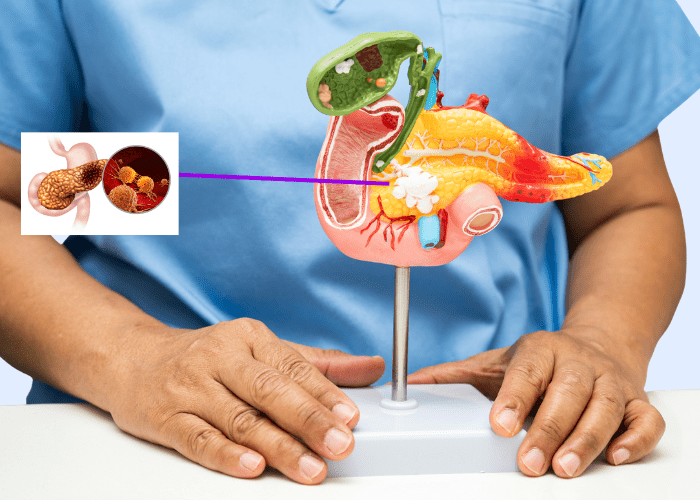
The pancreas is a small gland that is found behind the stomach and is very important in digestion and the maintenance of blood sugar. When the cancer starts compromising the functioning of pancreas, it does not necessarily show red flags at an initial stage.
Nevertheless, your body can still shoot you little signals, signals that are small, which can easily be disregarded, but could save your life when you notice them early enough.
In this blog, we’ll explore the early signs of pancreatic cancer, why they are easy to miss, and the most effective Pancreatic cancer treatment options available today.
What Is Pancreatic Cancer?
Pancreatic cancer is a disorder of the overgrowth of unwanted cells in the pancreas. The most frequent one is adenocarcinoma which begins in the ducts of the pancreas. Tumours that are located deeply in the body are in most cases not easily detected at an early stage thus the importance of being aware of the symptoms of Pancreatic Cancer.
Early Pancreatic Cancer Symptoms You Should Not Ignore
Pancreatic cancer is sometimes known as a silent disease as the symptoms of this disease are sometimes faint and are easily misinterpreted or confused with normal health problems. But the body does provide early warnings-warnings, which prove to be essential in making a diagnosis and successful treatment of Pancreatic cancer in time.
-
Unexplained Weight Loss
Sudden weight loss with no change in diet and exercise is one of the oldest and most visible symptoms of Pancreatic cancer. This occurs due to the inability of the body to effectively digest and utilize nutrients and the presence of cancer can also change metabolism. In the long run, this causes an observable decrease in weight and muscle mass that is usually accompanied by weakness.
-
Persistent Abdominal or Back Pain
Another typical symptom is a persistent, interminable pain in the upper abdomen that might spread to the back. This may be a painful experience, which is not only deep but also uncomfortable, and may aggravate after meals or when lying down. It happens when the enlarging tumor compresses to neighbouring nerves or organs and this makes it a significant indicator that should not be overlooked.
-
Loss of Appetite
Loss of appetite suddenly or feeling stuffed after having eaten little may be a warning of a pancreatic complication. Nutritional deficiencies and weight loss are gradually developing as many people report a shift in their tastes or simple repulsion towards meals.
4. Jaundice (Yellowing of Skin and Eyes)
Among the more obvious symptoms of Pancreatic cancer is jaundice. It makes the skin and eyes white as a result of accumulation of bilirubin in the body. This normally happens when a tumor obstructs the duct of bile. It can also be accompanied by dark urine, pale stools, and itchy skin- obvious signs that have to be addressed with the help of medicine.
Digestive Problems
Since the pancreas plays a key role in digestion, cancer can disrupt this process significantly. Patients may experience:
- Frequent nausea or vomiting
- Persistent indigestion or bloating
- Changes in stool, such as greasy, floating, or pale-colored stools
These symptoms occur because the pancreas is unable to release enough digestive enzymes, making it harder for the body to break down fats and nutrients.
New-Onset Diabetes
Pancreatic cancer can also be initially diagnosed by sudden diabetes, and this is especially common in people above 50 without prior diabetes. Insulin is produced by the pancreas, which may become dysfunctional in unpredictable situations, leading to the excessive appearance of sugar levels in the blood. This relationship allows making new-onset diabetes a significant but frequently ignored warning sign.
Take the Right Step Toward Expert Care
When you or your family member are showing any signs of a problem with Pancreatic cancer that are concerning, do not wait to consult a doctor.
You need to visit the specialists in Oncoplus Super Speciality Hospital to diagnose and undergo Pancreatic cancer treatment properly and efficiently. They have well trained oncologists and modern technology and offer holistic care to each patient.
Recent Posts
-

Pancreatic Cancer Treatment: Symptoms, Stages, Treatment Options & Prognosis
September 25, 2026
-
How to Boost Immune System Recovery After Chemo Naturally
September 21, 2026