Your breast cancer diagnosis can leave you feeling overwhelmed and alone, but with the right support system, you can get through this challenging time in your life with as little physical and emotional pain as possible.
The best oncologist in Delhi at Oncoplus Hospital is here to help with our expert team of oncologists and surgeons specializing in breast cancer treatment, helping our patients come up with the best possible treatment plan according to their particular case and needs. We work hard to improve the quality of life of our patients by offering the most advanced forms of breast cancer treatment available anywhere today.
Causes of breast cancer
There are many possible causes of breast cancer, but some of the most common include genetics, ageing, alcohol consumption, and hormone exposure. Additionally, having a family history of breast cancer or other cancers can increase your risk.
However, it’s important to remember that most women with one or more risk factors do not develop breast cancer. Awareness is key in preventing breast cancer, so take steps to reduce your risks and support those at high risk. See a doctor immediately if you notice any changes, such as lumps or discharge from your breasts.
If you live near Connaught Place- we’re here for you!
For example, only 5% of patients with breast cancer have been exposed to high radiation levels. If you’re worried about developing breast cancer due to any potential risk factor, talk with your doctor about what you can do to reduce your risk.
Common myths about breast cancer
There are many myths about breast cancer. Some people believe that only women get breast cancer, but men can get it too. Others think that breast cancer is only caused by genetics, but lifestyle choices can also play a role. Some people believe you can only get breast cancer if you have a family history of the disease, but this isn’t always the case.
And finally, some people think breast cancer is always deadly, but many treatments available now can improve your chances of survival. Fortunately, you don’t need to suffer from these misconceptions and myths anymore.
At ONCOPLUS HOSPITAL, we specialize in oncology and offer complete treatment for all cancers, including breast cancer! Our hospital has been recognized as one of the best for cancer treatment, with extensive experience and state-of-the-art facilities that deliver excellent patient care! So, give us a call today or fill out our online form to find more information on how we can help you with your diagnosis!
Ways to prevent breast cancer
There are many ways to prevent breast cancer, and the best way to do so is by getting the best medical oncology services in Delhi. The best oncologists and doctors in Delhi can help you prevent breast cancer by providing the best cancer hospital in Delhi with the best treatment options.
You can also get a mammogram every year to help prevent breast cancer. Mammograms use low-dose x-rays to create an image of your breasts.
If there’s any abnormal tissue in your breasts, it will show up on the mammogram and then be removed before it turns into cancer. It’s always best to go to the best oncologist in Delhi if you have any symptoms that concern you because they know exactly what they’re looking for. And even if you don’t have symptoms, the best doctors and oncologists in Delhi recommend going at least once a year for a regular mammogram.
How to approach treatment options
Cancer is a daunting diagnosis, but you’re not alone. The best way to approach treatment options is to consult with a team of specialists. Our cancer centre has some of the best oncologists and doctors in Delhi who can offer you the best Cancer Treatment in Delhi.
We’ll work with you to create a treatment plan that’s right for you and give you the support you need throughout your journey. ONCOPLUS HOSPITAL is the best medical oncology service in Delhi – contact us today to set up an appointment!
Common symptoms of breast cancer
There are several common symptoms of breast cancer, which include a lump or mass in the breast, changes in the size or shape of the breast, discharge from the nipple, and changes to the skin on the breast. If you experience any of these symptoms, you must see a doctor immediately. Early detection is key for successful treatment, so don’t delay. Our physicians offer the best medical oncology services in Delhi with the best cancer treatment in Delhi and the top cancer hospital in Delhi.
Breast cancer
Breast cancer is a disease in which the breast cells multiply uncontrollably. Breast cancer manifests itself in a variety of ways. The type of breast cancer is determined by breast cells develop into cancer.
Breast cancer can develop in a variety of regions of the breast. A breast comprises three main parts: lobules, connective tissue and ducts. Lobules are the glands that produce milk. Milk is transported to the breast via ducts. The connective tissue, composed of fatty and fibrous tissue, envelops and binds everything together.
Causes
According to doctors, the aberrant growth of some breast cells causes breast cancer. These cells multiply and divide more quickly than healthy cells, generating a bulk or lump. Cells can spread (metastasize) through your breast to reach your lymph nodes or other regions of your body.
Breast cancer typically develops from cells in the ducts that produce milk (invasive ductal carcinoma). Breast cancer can also start in other cells or tissues within the breast, including the glandular tissue known as lobules (invasive lobular carcinoma).
According to research, the risk of breast cancer may be increased by hormonal, behavioral, and environmental variables. However, it is unclear why some people with risk factors never get cancer while others do. A complicated relationship between your environment and genetic composition leads to breast cancer.
Prevention
Lowering the risk of breast cancer in women with a typical risk
Adjustments to your everyday routine may lower your risk of developing breast cancer. Try to:
- Consult your physician on breast cancer screening. When to start mammography and other breast cancer screening exams and tests, such as clinical breast exams, should be discussed with your doctor. Inform your doctor of the advantages and disadvantages of screening. You and your partner can choose the breast cancer screening methods that are best for you.
- Learn about your breasts by performing a breast self-exam to raise breast awareness. Occasionally checking their breasts during a breast self-exam might help women get to know their breasts and develop breast awareness. If you discover any lumps, new changes, or other unusual symptoms in your breasts, contact your doctor straight once.
- Breast cancer cannot be prevented, but increasing your awareness of it can help you recognize any odd signs and symptoms and better comprehend the typical changes your breasts go through.
- If you do consume alcohol, do it in moderation. If you choose to drink, keep your alcohol intake to no more than one drink per day.
- Try to work out most days of the week. And also be engaged for 30 minutes a day. Ask your doctor if you can resume exercise if you haven’t been active recently, and start cautiously.
- Don’t overdo postmenopausal hormone replacement. Combination hormone therapy may increase the risk of breast cancer. Discuss the advantages and hazards of hormone therapy with your doctor.
- Some women go through menopause with troubling signs and symptoms. For these women, the increased risk of breast cancer may be acceptable in exchange for reducing menopause symptoms.
- Use the least quantity of hormone therapy for the shortest time to lower breast cancer risk.
- Keep a healthy weight. Work to keep up a healthy weight if you have one. If necessary, seek guidance from your doctor on acceptable weight-loss measures. It would help if you ate fewer calories each day and gradually increased your workout.
Pick a balanced diet. Breast cancer risk may be lower in women who follow a Mediterranean diet that includes extra-virgin olive oil and mixed nuts. Most foods that make up the Mediterranean diet are plant-based, including fruits, vegetables, whole grains, legumes, and nuts. People who consume a Mediterranean diet prefer fish to red meat and healthy fats like olive oil to butter.
The month of October is observed as “Breast Cancer Awareness Month” to remind people to keep an eye on their breast health. After all, knowledge with your own breasts is your finest weapon for preventing or recognizing problems when they’re easiest to address. Knowing the ins and outs of how your breasts look and feel is known as breast awareness. Breasts that are healthy not only seem normal but also feel normal. Continue reading to discover the best ways to monitor your breast health, breast cancer warning signals, and more!
Breasts are unique, much like fingerprints. Every woman is unique. Size, shape, and consistency differ from one woman to the next, and if you look closely enough, your own two breasts are usually the same size, shape, and consistency.
Being breast mindful essentially implies that you are familiar with the qualities of your breasts. Knowing their qualities, it’s simpler to see if changes or anomalies happen. Specialists suggest yearly, clinical breast tests beginning at age 20 and yearly mammograms starting at 40.
Regardless of whether you get checked a few times per year, you ought to likewise foster the propensity for self-assessment month to month. As this assists you with realizing what is typical for your breasts, it makes it simple to see changes, similar to the abrupt appearance of at least one lump.
For most women, the least difficult method to play out a self-evaluation is while washing up or looking in a mirror. Regardless, you will want to take a glance at your breasts and sense every breast and armpit, simply as the gap from breast to collarbone. Remember that everyone’s breasts are different, so that you want to recognise what’s everyday – and what’s not – for yours. It’s absolutely everyday if:
You have regular lumpiness. This is probably puzzling due to the fact lumps are a key indicator of breast most cancers, however breast tissue has natural lumps and bumps. If it feels identical in each breasts, in all likelihood your natural, healthful breast tissue. Your breasts are barely different sizes.
Breast asymmetry isn’t always odd. It’s not anything to fear and occasionally evens out as you age. Look out for changes like, you have hair across the nipples. Your frame has hair follicles everywhere. Breasts aren’t any different. The look of darker or greater seen hair comes with hormone fluctuations. You experience tenderness round your period. This additionally stems from hormone fluctuations. Shortly earlier than your period begins, progesterone reasons your milk-generating mammary glands to swell at the same time as estrogen enlarges your breasts. These variables can cause tenderness and aches.
If you observe any of the following, see your doctor immediately, if there is any odd feeling, look, or form of your breasts. Lumps, difficult knots, swelling, or thickening in a breast or armpit. Dimpling, puckering, redness, or darkening of the skin. Unexpected discharge of fluid from both nipple. An eczema-like rash, scaly or itchy skin, or crusting on or round your nipple. Changes in nipple position, which includes moving inward or pointing differently. New soreness or ache that doesn’t cross away. These signs may also or might not sign danger, however allow your doctor to decide. They can be innocent changes, or because of an inflammation or contamination, this is effortlessly treated. On the opposite hand, they might be something extreme that calls for instant clinical attention.
Consult with the best oncologist in Delhi
Even though men do not have breasts like women, they do in fact have a small amount of breast tissue. The “breasts” of a man are similar to those of a girl before she hits puberty. Breast tissues grow and develop in women, but in men they don’t.
However because men still have breast tissue, men can also get develop breast cancer. Men also get the same types of breast cancers as women do. The risk of a man developing breast cancer in his life is around 1 in 1,000.
Doctors earlier believed male breast cancer was more severe than it was in women, but it seems that it’s the same.
The biggest problem is that breast cancer in men is usually diagnosed much later than breast cancer in women. This may be due to cultural social norms that men are not likely to be suspect something strange in that area.
Which Men Are More Likely to Get Breast Cancer?
It’s rare for men under age 35 to get breast cancer; with the chances of getting breast cancer going up with age. Most breast cancers in men will happen between 60 and 70.
Other factors like breast cancer in a close female relative; a history of radiation exposure of the chest, enlarged breasts due to drug or hormone treatments, some infections, or poisons can increase chances. Also, taking estrogen, having a condition called Klinefelter’s syndrome or severe liver disease or disease of the testicles such as mumps or a testicular injury, or an undescended testicle. Obese men are more likely to have breast cancer.
Men who look for the best male breast cancer treatment in Delhi will get diagnosed when they man find a lump on their chest.
But men also tend to delay visiting the doctor until they have develop severe symptoms, like bleeding from the nipple. By that point, the cancer may have spread too far.
If you’re looking for the best hospital for male breast cancer in Delhi, look no further than Oncoplus, where experienced cancer specialists treat every form of cancer.
COVID 19 vaccination experiences of women with Breast Cancer
For people who are living with chronic health conditions like breast cancer, the decision to get a COVID vaccine can seem daunting.
People may be nervous about the side effects of the vaccine because being immunocompromised comes with a higher risk of developing severe COVID-19 complications.
Whether you are currently undergoing treatment for breast cancer in Delhi or are done with treatment for breast cancer, you likely have must have some questions about how the vaccine may affect you.
Talking to the best cancer specialists in Delhi
will be helpful but it’s always better to hear from others who understand your situation and predicaments.
Here are a few experiences of women and how they felt getting their COVID-19 vaccine shots.
‘The side effects of Covid19 vaccination on breast cancer patient were next to nothing’
I got both my shots of Covishield and just experienced a sore arm after the first shot. After the second one, there were no side effects whatsoever and I’m very proud of myself for getting the vaccine.
‘I wanted to do it for my family and my own piece of mind.’I got both shots and there were very minimal side effects. Just a little tiredness paled in comparison to what I wanted to do for my family. Everyone worried that I’d get the virus because of my treatment: so now no worries at all!!
‘I feel protected in chemotherapy’
I got my first shot of the vaccine while I was undergoing chemotherapy. I had two rounds left and my oncologist urged me to get it and it wouldn’t cause any harm owing to the chemo.
Chemo could make the vaccine less effective, but it will still give a lot of protection and in case you contract COVID-19 after getting vaccinated, it greatly decreases the chances of death.
‘The process was quite safe’
I felt safe as I went to my local hospital where they had set up an isolated vaccine center for cancer patients. Everything was spaced out and the process was smooth. Everything took about 20 minutes and I was made to wait for 30 minutes to look out for a reaction. When I got home, I had my lunch and slept peacefully. I just kept feeling sleepy for a few days.
So don’t worry about getting the vaccine if you have breast cancer, worry if you’re not getting it.
What is breast cancer in men and breast cancer symptoms?
Breast cancer in men is a rare type of cancer that develops in the breast tissue of a man. Cancer in the breast is commonly referred to as a disease that mainly targets women, but it does occur in men. Men also have breast tissue like women, which can develop into breast cancer as cells in almost any part of the body can become malignant and may spread into other areas. Cancer occurring in men is a rare case because it is related to the cells, glands or parts that store or produce milk. The chances of arising tumour cells in the breast in a man in his whole life are 1 out of 900.
Cancer in men is most commonly found in older men around the age of 50 to 60, though it can occur at any age. Men don’t realise that breast cancer can happen to them also, due to this reason cancer in men is not diagnosed at the right time until it becomes severe or reaches its later stage.
What are the symptoms of breast cancer in men?
The following include the signs and symptoms for breast cancer, if you experience any of these, at any age make sure to contact and get checked out by the doctor.:
- A pain-free lump or thickening of the skin in or around the breast/underarm.
- Changes in the shape or size of the breast or chest area
- Changes in the skin of your breasts such as dimpling, puckering and redness
- Changes in your nipples like scaling, redness or swelling in any part of the breast
- Nipple when it starts to invert or turn inward
- Discharge/leakage of blood or fluid from the nipple
How does breast cancer develop in men?
The cause of breast cancer in men and women are similar. The breast of a man is similar to a girl’s breast before adolescence. During adolescence, women tend to produce more breast tissue along with fat but men naturally don’t.
Cancer always starts at the cellular level. Ordinarily, new and healthy cells are generated to replace the old ones. But due to disruption in the DNA as new cells are made, sometimes the cells grow out of control and begin to grow new cells abnormally which results in the formation of tumours, these can be either benign(non-cancerous) or malignant ( cancerous).
What are the risk factors of breast cancer?
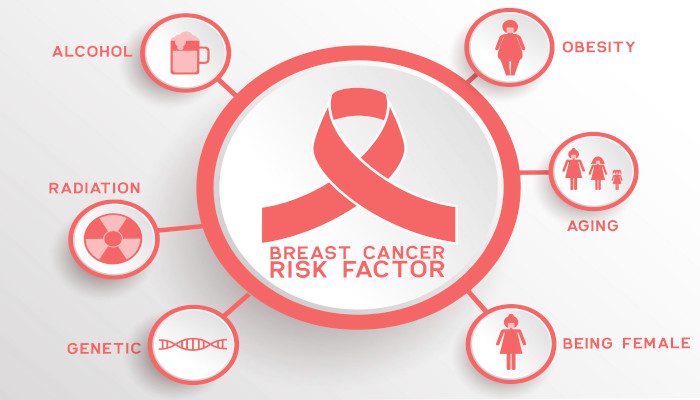
The following are the risk factors of developing breast cancer in men. A risk factor that we all can control and protect ourselves.
- Being overWeight: Being overweight is a common risk factor for developing breast cancer. One of the main sources of estrogen in the body is fat tissue. Having more fat tissue means having a high level of estrogen in the body which ultimately leads to a higher risk of breast cancer.
- Diet: One should eat a healthy and more fat-free diet to prevent breast cancer as our diet and daily consumings is directly associated with the amount of fat in the body.
- Alcohol consumption: Latest research and studies have stated that a woman is at a higher risk for breast cancer if the alcohol consumption in the body is high.
- Exposure to estrogen: If you take drugs related to estrogen then you are likely to get breast cancer or you are at risk.
The risk factor you can’t control
- Older age: The main risk factor of getting breast cancer being a male is being old aged. Most breast cancers are found in men with an age 50 or older.
- Genetic mutations: Inherited changes or mutation to certain genes like BRCA1 and BRCA2, men with these changes in the genes have a high chance of getting breast cancer.
- Personal or family history of breast cancer: If you have already been diagnosed with breast cancer then, you are most likely to get it again either in the same breast or the other one or if your family members like mother, father, siblings (first-degree relative) have a link with breast cancer then you can have it.
- Liver disease: Having disease related to the liver such as hepatic cirrhosis or Klinefelter syndrome (having two X chromosomes rather than one) which increases the female hormone-like estrogen in the body.
- Radiation therapy: Having radiation therapy of the chest or around in childhood or adulthood can increase the chances of having this disease.
How is breast cancer in men diagnosed?
If your doctor has certain reasons to suspect for cancer, the following test and procedure you can follow:
- Clinical breast exam: Clinical breast exam is a physical exam done by the doctor or your healthcare provider. During a clinical breast exam, the doctor checks and feels the appearances of your breast for any lump or look at the differences in the size or shape of your breasts. They use his/her fingertip to examine it.
- Imaging tests: Next your doctor may order tests such as molecular breast imaging that uses radioactive tracers and a special camera to find cancer, mammography uses X-ray technology to produce the images of the breast. The images created are called mammograms. Occasionally, magnetic resonance imaging (MRI) and sonograms are also used.
- Breast biopsy: It is usually done when something suspicious is caught on any of the imaging tests. The procedure involves a minute part of the breast tissue to be sent to the pathological labs to determine whether it is malignant or benign. It is the most ultimate way to be diagnosed .
- Immunohistochemistry: It is a staining process that is performed on the breast tissue in order to ensure whether the cancer cells contain HER2 receptors and/or hormonal receptors( such as estrogen and progesterone) or not, Because if it does then the patient can be treated with medications that inhibit the level of estrogen and progesterone.
Breast cancer has five stages i.e from 0 to IV, stage 0 is invasive cancer which indicates that the abnormal cells are present but have not spread in the surrounding and stage IV is metastatic cancer which determines that cancer has spread in the surrounding and even the other parts of the body.
Once you are diagnosed with breast cancer, then your doctor will help to determine the stage of cancer on which you are and treatment will be suggested according to the stage of the disease.
These tests and procedures are used to stage breast cancer :
- Body scan or CT scan: Full body scans are imaging tests that take pictures of your whole body and help to scan cancer, their stages and other diseases early.
- Bone scan: It is an imaging test that safely scans the bones of your body by using a radioactive drug, radiopharmaceutical and is an efficient tool for finding cancer that has spread or about to spread in the bone. It can also help to determine how well is your working for cancer in the bones.
- Positron emission tomography (PET) scan:

It is an imaging procedure that uses radioactive substances such as radiotracers to visualise and check the changes taking place on metabolic processes or other activities like blood flow, absorption and regional chemical composition.
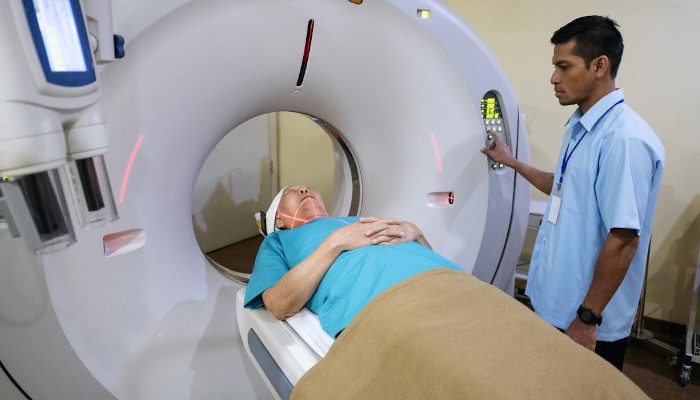
Treatments for men with breast cancer
In order to receive the appropriate treatments and medications, you must measure your cancer stage, overall health and preferences. Treatment for men and women are generally the same. Breast cancer treatments often include surgery and other types of therapies and medication, if needed.
Surgery:
The surgeries are of two types
The first one is a mastectomy, in which your whole breast is removed including the areola and the nipples.
While the second one sentinel lymph node biopsy. This type of surgery involves analysing and removal of only the lymph nodes and tumour cells.
Radiation therapy or radiotherapy:
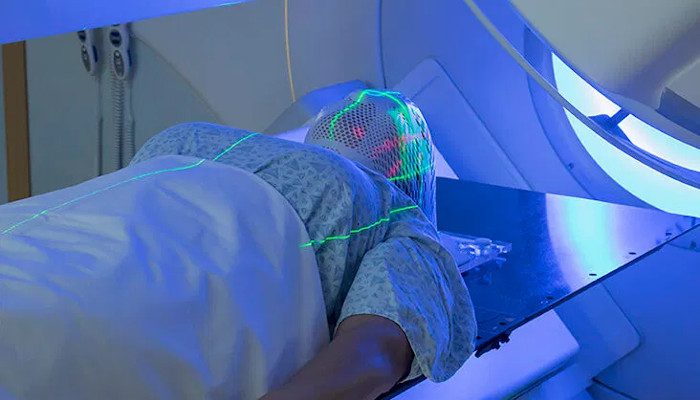
If your cancer is not treated or few cancerous cells are remaining even after the surgery, then this therapy will be your major treatment. Radiation therapy uses a beam of intense energy like X-ray and protons to kill the cancer cells.
Chemotherapy:
This uses medication to cure cancer by the vein in your arm or pill form or it can be both.
Book an appointment with the Best Cancer Specialist at Oncoplus Hospital.
Breast Cancer-stay aware:Breast cancer occurs when there is an alteration of cellular growth and production in the breasts that can affect and spread to other organs of the body. Breast cancer can evolve in breast lobules, ducts, fatty tissues, or fibrous connective tissue.
Types of Breast Cancer
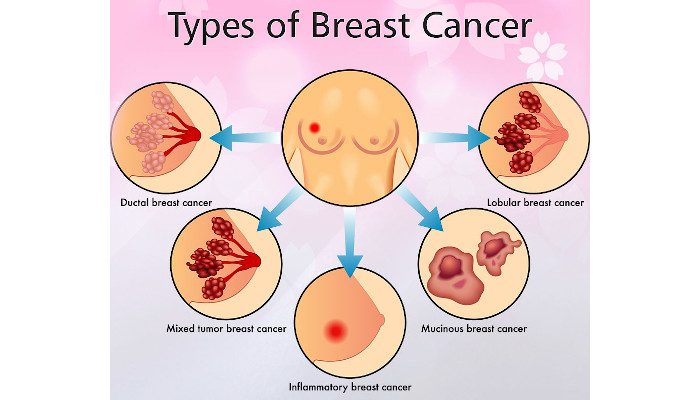
Here are some breast cancer types:
- Ductal Carcinoma in situ (DCIS): a non-invasive type of breast cancer and not life-threatening but requires treatment. Cancer has started inside the milk ducts but has not affected adjacent breast tissues.
- Lobular carcinoma in situ (LCIS): cancer cells developed in the breast lobules (glands that produce milk) but have not spread on surrounding tissues.
- Invasive ductal carcinoma or infiltrating ductal carcinoma: cancer developed in milk ducts and has invaded surrounding breast tissues, and is the most common type of breast cancer.
- Invasive lobular carcinoma or infiltrating lobular carcinoma: cancer that is formed in the breast lobule, where milk is produced and has spread to adjacent breast tissues.
- Inflammatory breast cancer: a rare and aggressive type of breast cancer; it starts with redness and swelling; it spreads rapidly within a few hours to a few days. Cancer cells obstruct lymph nodes in the breast, and lymphatic vessels are unable to drain properly causing imminent swelling and redness.
- Triple-negative breast cancer: considered a more aggressive type of breast cancer and has a poorer prognosis; it lacks estrogen and progesterone receptors and does not have excess HER2 proteins.
- Paget’s disease of the nipple: a rare type of breast cancer; cancer cells affect the ducts near the nipples and disperse on nipple surface and areola causing the nipple surface to have dark circles, scaling, redness, irritation, and itchiness.
Breast Cancer Staging
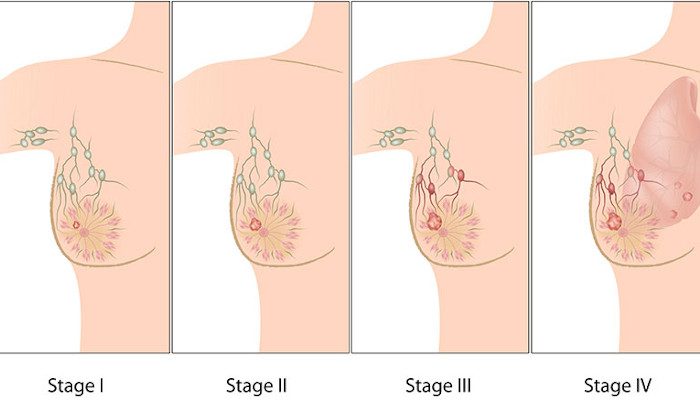
- Stage 0: cancer cells are limited in the breast ducts and have not invaded adjacent tissues; non-invasive type of cancer.
- Stage 1:
- Stage 1A: primary tumor <2 centimeters and has not spread to lymph nodes
- Stage 1B: has reached lymph nodes; with or without the presence of breast tumor, tumor size <2 cm
- Stage 2:
- Stage 2A: tumor size 2 cm and affected 1-3 adjacent lymph nodes; or tumor size 2-5cm and no lymph node affected
- Stage2B: tumor size 2-5cm and affected 1-3 axillary lymph nodes; or >5cm and no lymph node affected
- Stage 3:
- Stage 3A: proliferated 4-9 axillary lymph nodes, or has huge internal mammary lymph nodes, primary tumor size can be varied
- Stage 3B: the tumor has reached the chest wall or skin; with or without lymph node invasion, can affect up to 9 lymph nodes; has not affected other parts of the body
- Stage 3C: affected >10 axillary lymph nodes, near the collarbone, or the internal mammary nodes, has not affected other parts of the body
- Stage 4: tumor can be any size; cancer cells have spread to the lymph nodes and body organs such as bones, brain, lungs, and liver; breast cancer metastasis
- Recurrent: cancer cells have reappeared after the treatment; described as local, regional, or distant.
Breast cancer in males
The occurrence of breast cancer in males is rare. It commonly affects older men but can also develop in younger men. When breast cancer is detected and treated at an early stage, it can be cured.
Breast Cancer Symptoms
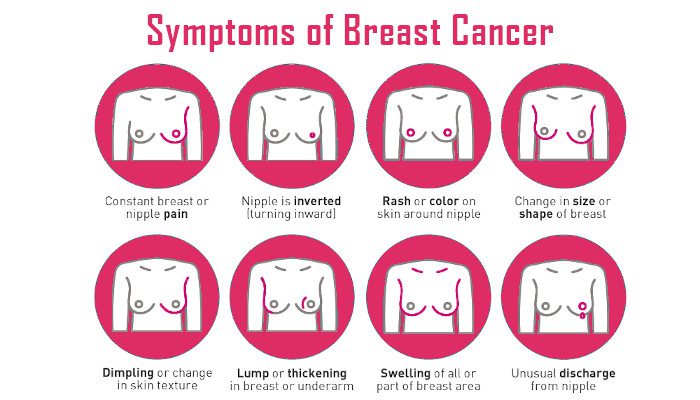
Most breast cancer symptoms cannot be identified or felt in their early stages. There are various presentations of breast cancer symptoms and here are some breast cancer signs:
- Visible lump in the breast or thickening of tissues that have appeared recently
- Inverted nipples, which is not observed in the previous appearance
- Bloody discharge from the nipples or any discharge except breast milk
- Swelling or redness on any parts of the breast
- Dimpled skin on the breast
- Changes of skin texture – peeling, flaking, or scaling of breast skin
- Pain on breasts
- Swelling of lymph nodes on the breast area
When you have any of these breast cancer signs, have yourself checked by a doctor.
Who are at risk of developing breast cancer?
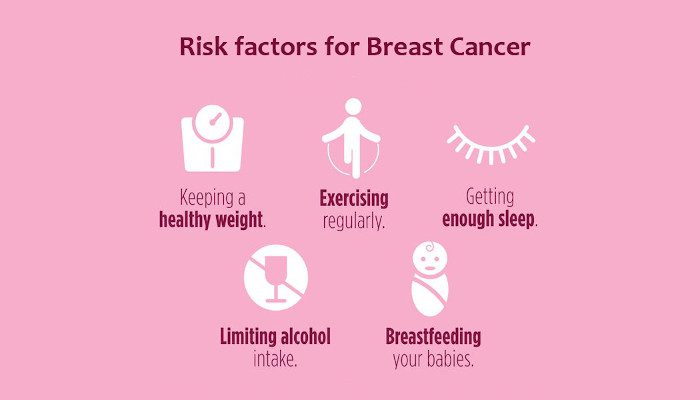
Breast cancer awareness is very important and knowing risks for cancer development is one way we can stop it.
- Age: as age increases, a person is at high risk of developing cancer
- Female gender: more common in women
- Family history: if you have an immediate family member diagnosed with breast cancer, you are at high risk of having breast cancer
- Menstruation: starting your menstruation <12 years old are at risk of cancer
- Menopausal: starting menopausal at an older age
- Previous history: history of breast cancer or any breast problems such as lobular carcinoma in situ or atypical hyperplasia
- Exposure to radiation
- Obesity
- Never been pregnant
- First child after 30 years old
- Postmenopausal hormone therapy
Book an appointment with Oncology experts at Oncoplus Cancer care.
Diagnosis
There are several ways on how to detect a tumor. Here are some methods to diagnose breast cancer:
- Breast Exam: the doctor examines for any unusual growth or lumps on the breasts
- Imaging tests: to detect any lumps or abnormal growths, or differentiate a solid mass from a fluid-filled cyst; includes mammogram, ultrasound, MRI- Magnetic Resonance Imaging
- Biopsy: removes a sample of breast tissue and sent to the laboratory for analysis
Book an appointment with the best kidney cancer doctors in Delhi for Kidney Cancer Treatment
Treatment
Can blood cancer be treated? There are various blood cancer treatments that are used depending on the type of cancer in the blood and its severity.
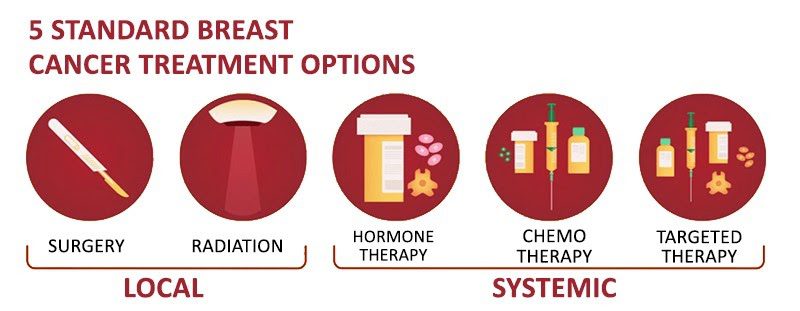
- Surgery
- Lumpectomy: done to stop the spread of cancer cells by removal of the tumor and including healthy tissues surrounding the tumor.
- Mastectomy: involves the removal of the entire breast including the lobules, ducts, fatty tissue, some skin, nipple, and areola.
Types of mastectomy:- Sentinel node biopsy
- Axillary lymph node dissection
- Reconstruction
- Radiation therapy: kills cancer cells by directing the tumor with a controlled dose of radiation
- Chemotherapy: kills cancer cells; can be used as cytotoxic chemotherapy, adjuvant chemotherapy, and neoadjuvant chemotherapy
- Hormone blocking therapy: used to stop hormone-sensitive breast cancers from recurring
- Targeted therapy drugs: used to invade specific abnormalities within cancer cells, such as the human epidermal growth factor receptor 2 (HER2)
Book an appointment with the Best Cancer Specialist at Oncoplus Hospital.
A GUIDE ON BREAST CANCER
Breast cancer is the most common cancer in women after lung cancer leading to death in women.
Symptoms of breast cancer
The first most sign of breast cancer in women usually appears as a lump in the breast or an armpit or an area of thickened tissue in the breast.
Other common signs and symptoms include:
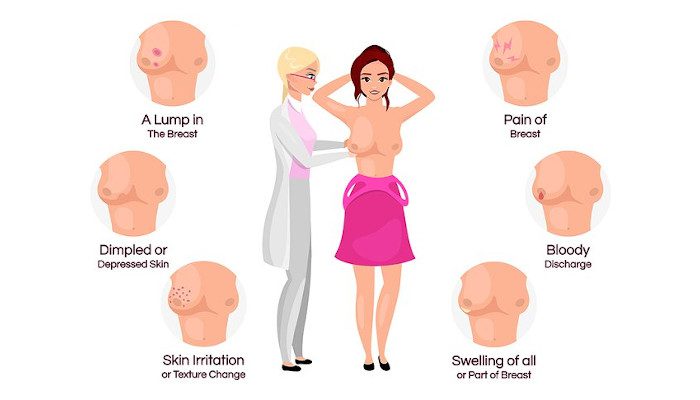
- a sunken or inverted nipple
- a rash around the nipples
- Flaking, peeling, or scaling of the skin on the nipple or breast
- pain in the breast or armpit that does not go with the monthly cycle
- redness of the skin of the breast
- discharge (possibly containing blood) from a nipple
- a change in the size and shape of the breast
However most lumps in the breast are not cancerous, hence it is suggested that a woman should visit a doctor for an examination if she notices a lump on the breast.
Stages of breast cancer
The stages of any cancer are defined by the oncologist based on the severity or to what extent cancer has spread in the body. Similarly, stages in Breast cancer are also defined based on the size of the tumor and the extent it has spread to lymph nodes or other parts of the body.
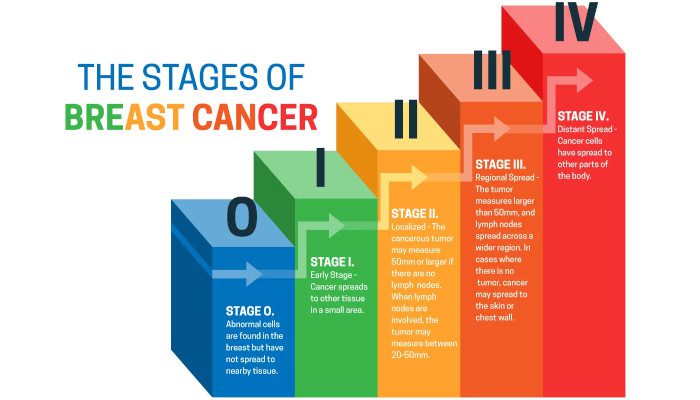
Stages are explained below:
Stage 0:
At this stage, the cancerous cells are limited to within the ducts and have not spread surrounding tissues, this stage is known as ductal carcinoma in situ (DCIS).
Stage 1:
At this stage, the tumor becomes 2 centimeters (cm) in size. At this stage, the cancerous cells have not affected any lymph nodes.
Stage 2:
At this stage, the tumor is 2 cm across in size also; it has started to spread to surrounding lymph nodes, or the tumor can be 2–5 cm across in size but has not spread to the nearby nodes.
Stage 3:
At this stage, the tumor is up to 5 cm across in size, and it has spread to several lymph nodes or the tumor is larger than 5 cm also has spread to a few lymph nodes.
Stage 4:
At this stage, the cancer cells have spread to distant organs including the bones, liver, brain, or lungs.
RISK FACTORS
The exact cause of breast cancer is not known but a few risk factors make it more likely to occur. These are listed below:
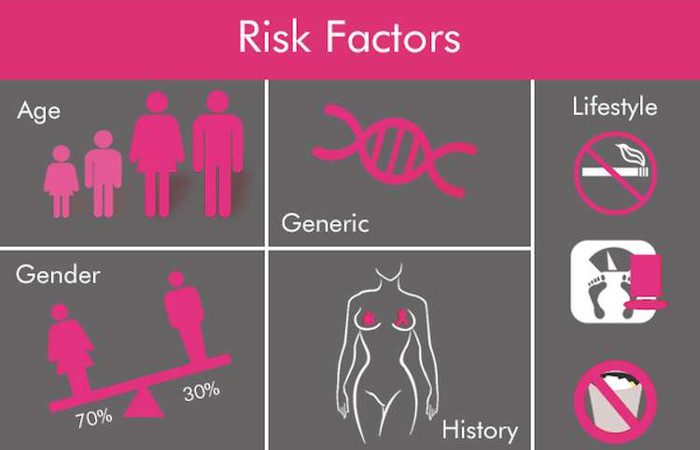
1. Age:
The risk of breast cancer in women increases with increasing age. The chances of developing breast cancer at the age of 20 years are approx. 0.06% and it increases up to 3.84% by the age of 7o years.
2. Genetics:
If there is a family history of having breast cancer, then the chances of developing breast cancer increase. That’s why women are recommended to seek genetic screening who have a family history of breast, ovarian, fallopian tube, or peritoneal cancer.
3. Women with a history of breast lumps or breast cancer:
Those women who have had breast cancer previously, are at more risk to have it again than those who have no history of the disease.
In addition, having some types of noncancerous breast lump increases the chance of developing breast cancer later in life.
4. Dense breast tissue:
Women with dense breasts are likely to develop breast cancer so Oncologists at Oncoplus cancer care suggest all women seek a regular cancer screening.
5. Estrogen exposure:
Extended exposure to estrogen increases the risk of breast cancer.
For women who start their menstrual cycle earlier or entering menopause at a later than the average age, estrogen level is high in such women.
6. Body weight:
Women who are obese or overweight after menopause may also have a higher chance of developing breast cancer, possibly due to increased estrogen levels.
7. Alcohol consumption:
A higher rate of regular alcohol consumption is said to contribute to the development of breast cancer.
8. Radiation exposure:
Undergoing radiation treatment for different cancer may be a risk factor to develop breast cancer later in life.
9. Hormone treatments:
According to the studies, oral contraceptives, hormone replacement therapy may increase the risk of breast cancer.
Diagnosis of Breast cancer
Several diagnostic tests and procedures are done to rule out the accurate diagnosis:
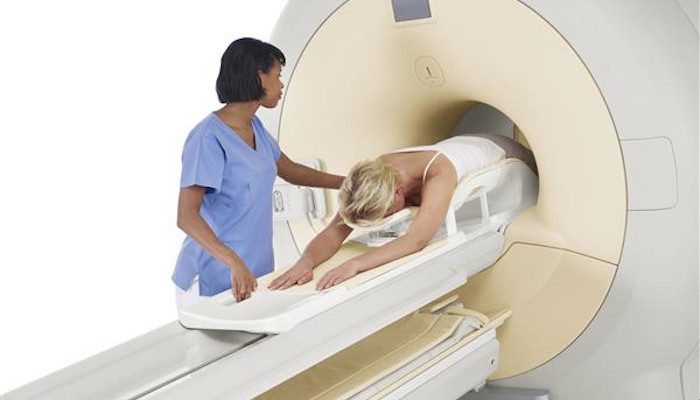
Breast exam
The Oncologist checks the breasts for lumps and other symptoms.
Imaging tests
Mammogram: This is a type of X-ray that is done during an initial breast cancer screening. It produces images that help an expert detect any lumps or abnormalities in the breast.
Ultrasound: Sonography helps a doctor to differentiate between a solid mass and a fluid-filled cyst.
MRI: MRI is used as a screening tool for those at higher risk of breast. It combines different images of the breast to help a doctor identify cancer or other abnormalities in the breast.
Biopsy: In a biopsy, a sample of tissue from the breast is extracted and is sent to a laboratory for analysis.
This rules out whether the cells are cancerous. If cells are cancerous then a biopsy indicates the type of cancer.
Diagnosis also involves staging cancer to determine:
- the size of a tumor
- to what extent it has spread
- whether it is invasive or non-invasive
Book an appointment with the best cancer doctors in Delhi for Breast Cancer Treatment
Treatment options for breast cancer
Treatment depends on several factors, including:
- the type and stage of the cancer
- the person’s sensitivity to hormones
- the age
- the overall health of the individual
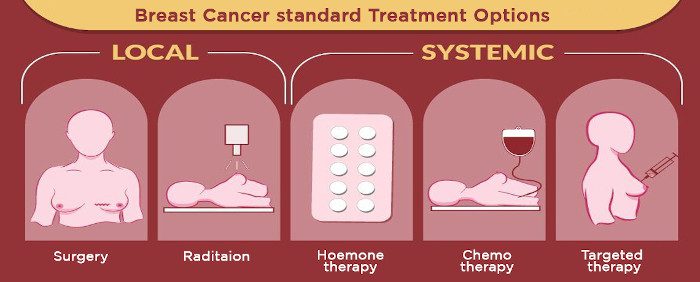
Important treatment options include:
Cancer Surgery
Surgical intervention depends on the type of cancer and individual preference. Types of surgery include:
Mastectomy: This procedure involves the removal of the lobules, ducts, fatty tissue, nipple, areola, and some skin. In some types of breast cancer, The OncoSurgeon removes the lymph nodes and muscle in the chest wall as well.
Lumpectomy: This involves removal of the tumor and a small healthy tissue around it.
This procedure can help stop the spread of cancer to other parts of the body. This type of procedure is considered a treatment option when the tumor is small and can be separated easily from its surrounding tissue.
Sentinel node biopsy: this biopsy is done when breast cancer reaches the sentinel lymph nodes, which are the first nodes to which cancer can spread, and then it can spread into other parts of the body through the lymphatic system.
Axillary lymph node dissection: If cancer cells are found in the sentinel nodes, then several lymph nodes in the armpit may be removed which can prevent cancer from spreading.
Reconstruction: As the name suggests, the surgeon reconstructs the breast to look more natural after mastectomy. The patient party and the surgeon decide this unanimously. This can definitely help the patient to cope with the negative psychological effects of breast removal.
The breast can be reconstructed at the same time as performing a mastectomy or later. A breast implant is placed in most cases to give natural look to the breast.
Radiation therapy
Radiation therapy involves targeting the tumor with controlled doses of radiation destroying the remaining cancer cells. The patient may undergo radiation therapy a month after surgery.
Chemotherapy
Chemotherapy drugs kill cancer cells if there is a high risk of recurrence or spread.
Hormone blocking therapy
Hormone blocking therapy prevents hormone-sensitive breast cancers from recurring after treatment.
Hormone blocking therapy is considered as the only option for patients who are not suitable candidates for surgery, chemotherapy, or radiotherapy.
Book an appointment with the Best Cancer Specialist at Oncoplus Hospital.